


UGC stands for user-generated content, and a UGC creator is a content maker who produces branded videos, photos, and reviews that look and feel native rather than like an advertisement. Brands pay UGC creators for the content itself, not for their follower count, which is what separates the role from traditional influencer marketing.

UGC stands for user-generated content, meaning any video, photo, review, or post created by an everyday person rather than a brand's internal marketing team. The term covers the content itself. It's a separate idea from the person making it.

A UGC creator is someone who produces user-generated content on behalf of a brand, usually in exchange for payment, free product, or both, without necessarily posting it to their own following. This is the detail that trips people up: a UGC creator's content often never appears on the creator's own page at all. Instead, the brand licenses it to run as an ad, a website testimonial, or a product page video.
That's fundamentally different from influencer marketing, where the value is the influencer's existing audience. A UGC creator with 200 followers and a UGC creator with 200,000 followers can be paid the same rate for the same video, because the brand is buying the footage, not the reach.
A UGC creator's day-to-day work centers on a small set of repeatable content formats, shot to look casual even when it's carefully planned.
Common content types:
Where it gets posted:
Most working UGC creators do a mix of all four, and licensing terms (how long a brand can use the footage, and where) are usually negotiated per project.
Brands aren't chasing UGC because it's trendy. They're chasing it because it converts, and because audiences have gotten good at spotting a polished, brand-generated ad from three seconds in.
Community-driven, UGC-style content delivers close to seven times the engagement of branded content alone, and the category isn't slowing down: the global UGC platform market is projected to grow from roughly $9.85 billion in 2025 to $12.63 billion in 2026, on its way to an estimated $43.92 billion by 2031 (Source: User-Generated Content Platform Market Report, Mordor Intelligence, 2026).
The reasoning behind that growth is simple. As creator economy expert Lindsey Gamble put it, "what worked yesterday won't deliver results tomorrow" (Source: Creator Economy Live 2026, brandlens.io).
Audiences are getting more skeptical of studio-polished ads every year, and UGC is the format built to answer that skepticism directly.
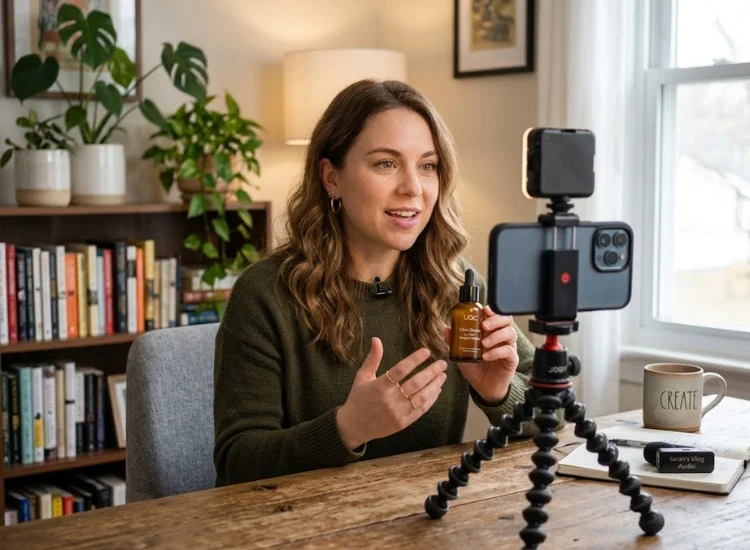
None of this works if the content still looks scripted. The entire value of UGC is that it reads as a real opinion, not a brand message in disguise, which makes one skill non-negotiable: delivering a script so naturally that it doesn't sound like one.
That's harder than it looks. A UGC creator is often handed exact brand talking points, key claims that have to be included word for word, and a tight video length, all while needing to sound completely off-the-cuff on camera. Much of this overlaps with the fundamentals of being a content creator on camera more broadly, delivery is delivery, whether the content is UGC or not.
One Teleprompter.com reviewer, a working UGC creator, put it simply:
"I'm able to read at a natural pace and keep an authentic engaging tone!" — Just.call.meh.tay, App Store review, United States, August 2025)
Beyond delivery, most working UGC creators also build basic comfort with:
For a deeper walkthrough of each of these, our content creator tips cover the fundamentals step by step.

The role comes with real friction points that are worth knowing before diving in.
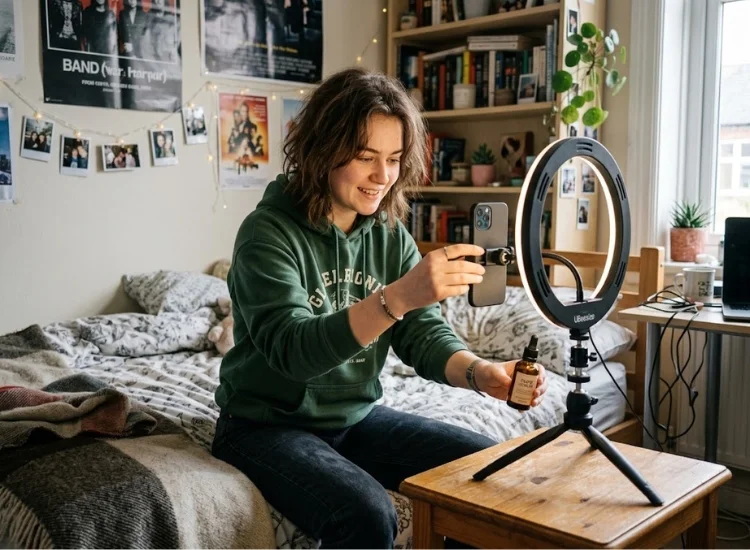
Being a UGC creator comes down to one trade: brands pay for content that looks unscripted, not for how many people follow you. That's what makes the role open to almost anyone willing to build a small portfolio, pitch directly, and treat delivery as a skill worth practicing.
The part that separates a one-off gig from a repeatable business is consistency: turning a brand brief into a natural-sounding script every time, hitting the exact length a brand asks for, and delivering footage that's ready to use without a reshoot. Get that part right, and the follower count stops mattering at all.
UGC stands for user-generated content, meaning any video, photo, or written content created by an individual rather than a brand's marketing team.
A UGC creator is someone who produces branded content, such as reviews, unboxings, or testimonials, that a brand pays for and licenses to use in its own marketing, often without the content ever appearing on the creator's personal page.
An influencer is paid for access to their existing audience. A UGC creator is paid for the content itself, which is why follower count usually isn't a requirement for UGC work.
No. Most UGC contracts are based on the footage a brand can license and reuse, not on the creator's reach, so a small or brand-new account can still land paid work.
Start by filming a small sample portfolio, then pitch brands directly with specific video ideas rather than waiting to be discovered.
A smartphone with a decent camera, natural lighting, and basic editing software are enough to start. Most working UGC creators add a tripod, a clip-on mic, and a teleprompter app once they're delivering scripted brand content regularly.


.png)


.png)