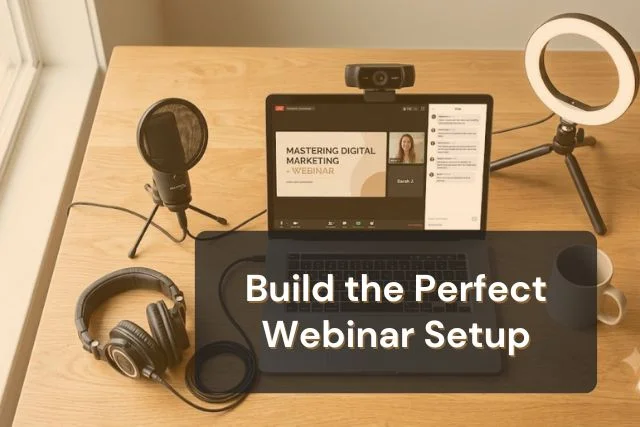


Webinar equipment is the hardware and software you need to run a professional online session: a microphone, a webcam, lighting, a computer, presentation software, a webinar platform, and a reliable internet connection. Getting each piece right determines whether your audience stays engaged or drops off.
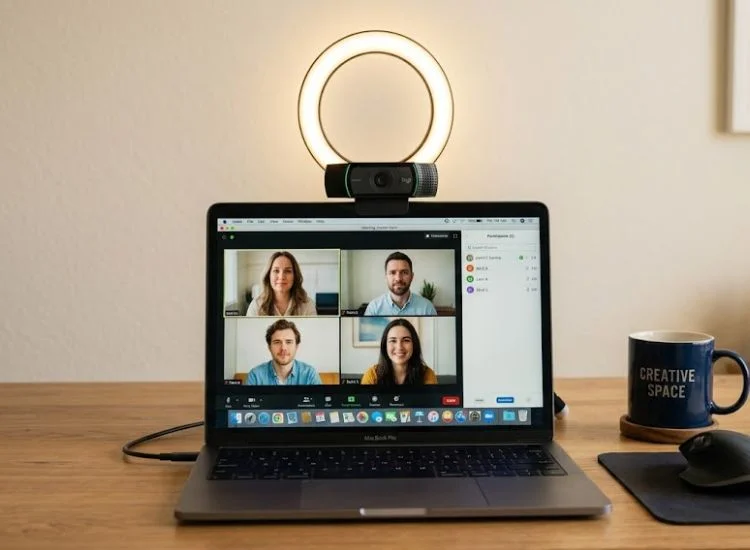
Webinar equipment covers everything you need to present, record, and stream a live or on-demand online session: audio gear (microphone, headset), video gear (webcam, lighting), a computer with a stable internet connection, presentation software for your slides, and a dedicated webinar platform to host and manage attendees.
Businesses take this seriously for good reason. 85% of businesses consider webinars essential to their marketing strategy (Source: Webinar Statistics 2026, DemandSage), and the equipment you use directly shapes whether that strategy pays off.
Here's what you need to run a webinar, broken down by budget and professional tier.
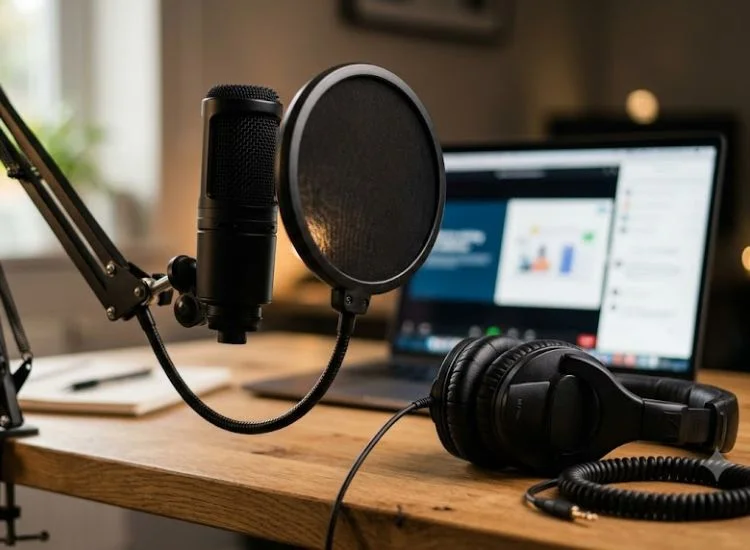
A microphone and headset matter more than any other piece of webinar equipment because sound quality drives how long people stay engaged. Built-in laptop microphones pick up room echo, keyboard clicks, and background noise. A USB condenser mic solves most of that for under $80. Pair it with a wired headset so you can monitor your own audio levels and avoid feedback loops during Q&A.
Your webcam doesn't need to be expensive, but it does need to be clear. A 1080p external webcam outperforms almost any built-in laptop camera, especially in low light. If you already own a DSLR or mirrorless camera, a capture card can turn it into a higher-quality webcam feed.
Good lighting is the fastest, cheapest upgrade you can make to your webinar equipment setup. A single ring light or softbox placed in front of you, facing your face, eliminates harsh shadows and makes you look more professional on camera. Position it slightly above eye level to avoid glare on glasses.
Presentation software (PowerPoint, Google Slides) handles your visuals. Webinar software (Zoom, GoTo Webinar, Zoho Meeting) handles hosting, attendee management, chat, polls, and recording. These are two different tools doing two different jobs, and confusing them is a common setup mistake.
A dropped connection mid-webinar is the fastest way to lose audience trust. Keep a backup option ready, whether that's a phone hotspot or a dedicated LTE router, so a primary internet failure doesn't end your session early.
An online teleprompter keeps your delivery smooth and natural. It lets you read your talking points while looking straight into your webcam, instead of glancing down at notes or a second monitor, which is what breaks the sense of direct connection with your audience.
Teleprompter.com is an online teleprompter that runs in your browser or as an app on iOS, Android, and macOS, so you can scroll your script at eye level in perfect sync with your webcam. No extra hardware, no memorizing your script, no losing your place mid-webinar.
Business and professional users consistently rate Teleprompter.com as one of the tools that makes them feel most prepared on camera:
Whether I'm recording content for my podcast, hosting a webinar, or delivering a presentation, this teleprompter keeps me on track and boosts my confidence." — JSmith2478, iOS App Store review, February 2025, United States
Once your equipment is set, delivery is what turns a good setup into a good webinar. See the guide on how to sound confident on webinars for pacing, eye contact, and vocal tips that make the most of your setup.
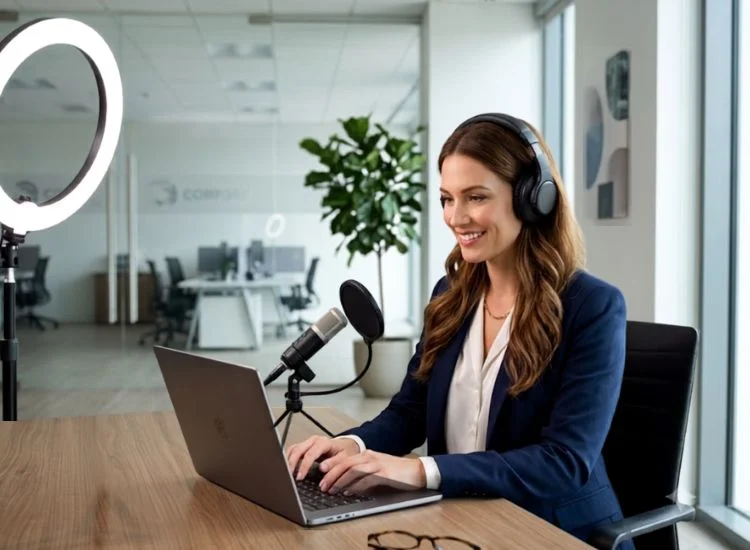
Interference comes from three sources: audio, camera, and connection problems. Each has a simple fix you should run through before you go live.
Webinar equipment needs are shifting as software takes over more of what used to require dedicated hardware.
For a deeper look at 2026 benchmarks, see Teleprompter.com's full webinar statistics report.
Start with audio and lighting since they have the biggest impact on how professional your webinar feels. Add a reliable webcam, a backup connection, and the right software split between presentation and hosting. Then round out your checklist with an online teleprompter that keeps your delivery natural instead of scripted or scattered.
Want the full process from planning to delivery? Check out our guide on how to create on-demand webinars, or see how webinars compare to in-person seminars if you're still deciding on format.
At minimum, you need a computer, reliable internet, a microphone, a webcam, and webinar hosting software like Zoom or GoTo Webinar. Adding a headset, basic lighting, and a teleprompter significantly improves audio quality and delivery.
A USB condenser microphone in the $50-$100 range covers most webinar needs. If you host webinars regularly or need studio-level audio, an XLR microphone paired with an audio interface delivers noticeably better sound.
A dedicated 1080p webcam is the simplest option, but a smartphone camera paired with an app like Continuity Camera or Camo can match or exceed cheap webcams, especially in good lighting.
Start with a USB microphone, a 1080p webcam, one basic light source like a ring light, and a wired internet connection. That covers the fundamentals without overspending, and you can add an audio interface, better lighting, or a teleprompter as your webinar schedule grows.
Lighting and audio quality have the biggest visual and perceived-professionalism impact, more than camera resolution. Add a single light source facing your face, use a dedicated microphone instead of your laptop's built-in mic, and clean up your background. An online teleprompter also helps, since maintaining eye contact with the camera reads as more polished than glancing at notes.
Most webinar platforms recommend at least 3-5 Mbps upload speed for standard-definition streaming, and 5-10 Mbps for HD. A wired connection is more stable than Wi-Fi, and a backup hotspot protects against outages.
Remove phones from the room, separate crossed cables, clean your webcam lens, and pause background downloads, updates, and cloud syncing before you go live. Running through this checklist a few minutes before your session catches most common issues.


.png)


.png)


