

Storytelling has always been a fundamental part of how we connect and communicate. From ancient myths passed down through generations to today's blockbuster movies, storytelling remains a timeless art that brings people together through shared experiences and emotions. It's not just about entertainment; it's about expressing complex ideas, preserving history, and inspiring others.
Knowing the different types of storytelling can greatly improve your communication skills. Each type offers its own strengths and can be used in various settings to achieve specific goals. Whether you're a teacher trying to capture your students' attention, a marketer looking to engage your audience, or someone who loves to share stories, mastering these techniques can greatly enhance your effectiveness.
Storytelling works because it helps people understand, remember, and care about what you are saying. It gives information a human shape, so the message feels easier to follow and harder to forget.
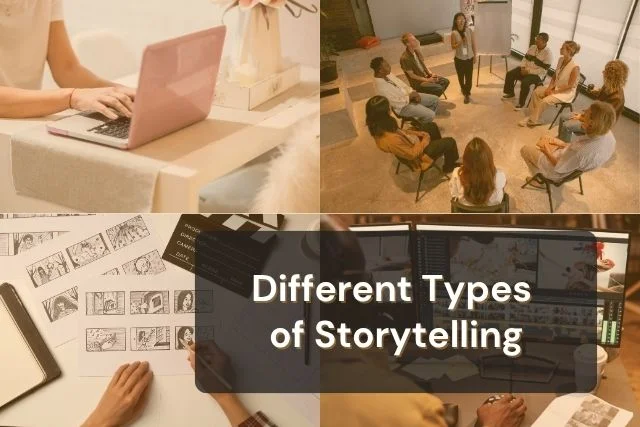
Storytelling breaks down into four core types: oral, written, visual, and digital. Each one uses a different medium to shape a message, and most creators end up blending two or more depending on their audience and platform. Here's how each type works and where it fits best.

Oral storytelling is the age-old tradition of telling stories through spoken words. Long before writing was invented, people used oral storytelling to pass down knowledge, traditions, and values from generation to generation. It was the primary way to record history and teach important lessons.
Different cultures have their own rich traditions of oral storytelling. For instance, Native American tribes have long relied on oral stories to keep their heritage alive and to educate the younger members about their customs and beliefs. In West Africa, griots—who are traditional storytellers—play a vital role in preserving community history and genealogy through their engaging narratives.
Key elements and techniques:
Engaging the audience is the heart of effective oral storytelling. Here are some essential elements:
Written storytelling is all about sharing narratives through the written word. This practice has come a long way since its beginnings. Ancient civilizations used pictographs and hieroglyphs to document stories and events. With the invention of the alphabet, storytelling became more detailed and complex, giving rise to epic poems, religious texts, and historical accounts.
The advent of printing technology marked a significant milestone in the evolution of written storytelling. The printing press made it possible to produce books on a large scale, making stories more accessible to a wider audience. Today, written storytelling encompasses a vast array of genres and formats, from novels and short stories to blogs and social media posts, enabling writers to share their tales with a global audience.
Key Elements and Techniques:
Crafting a compelling written story involves several essential elements:

Visual storytelling is all about using images, videos, and other visual elements to narrate a story. It’s a powerful way to express complex ideas quickly, often stirring strong emotions. This approach spans across various mediums such as films, comics, photography, and digital media.
Key elements and techniques:
Key elements that make visual storytelling effective include:
Digital storytelling uses technology and multimedia to tell engaging stories. It's a storytelling method that has exploded with the internet and social media. Unlike traditional storytelling, digital storytelling combines text, images, audio, video, and interactive elements, making it a vibrant and immersive way to connect with audiences.
The rise of digital storytelling has had a significant impact. It has made storytelling accessible to anyone with internet access and basic digital tools. This inclusivity has allowed for a diversity of voices and stories, enriching the array of narratives available to a global audience.
Key elements and techniques:
Creating an effective digital story involves blending various multimedia elements to form a cohesive and engaging narrative. Key components and techniques include:
Understanding and mastering different types of storytelling can significantly enhance your ability to communicate and connect with your audience. From the ancient art of oral storytelling to the modern techniques of digital storytelling, each method offers unique tools and opportunities to make your stories more impactful.
Whether you're using oral storytelling to captivate a live audience, written storytelling to convey intricate narratives, visual storytelling to create immersive experiences, or digital storytelling to engage and interact with a global audience, honing your skills in these areas will help you become a more effective and versatile storyteller.
The four types of storytelling are oral, written, visual, and digital. Oral storytelling relies on spoken word and voice, written storytelling uses text, visual storytelling uses images and video, and digital storytelling blends multiple media into one interactive format.
Common storytelling techniques include tone and pacing for oral storytelling, plot and character development for written storytelling, framing and visual composition for visual storytelling, and multimedia layering for digital storytelling. The right technique depends on which storytelling format you're using and what your audience expects.
Oral storytelling is delivered through spoken word, using tone, pace, and body language to bring a story to life in real time. Written storytelling is delivered through text, giving the audience control over pacing and relying on plot and character development instead of vocal delivery.
Digital storytelling is generally the strongest storytelling format for social media and video content because it combines text, audio, visuals, and interactivity in a single piece. This matches how audiences consume content across platforms like YouTube, Instagram, and TikTok.
Start with your audience and platform. Live presentations call for oral storytelling, blogs and books call for written storytelling, films and photography call for visual storytelling, and social content calls for digital storytelling. Many creators blend two or more types depending on the message.


.png)


.png)