

Setting up a teleprompter takes two forms: a hardware rig with a beamsplitter glass, or a teleprompter app you run on a phone, tablet, or browser. Most creators only need the second option. This guide walks through both paths, plus the configuration steps and fixes that make the difference between a clean setup and a frustrating one.
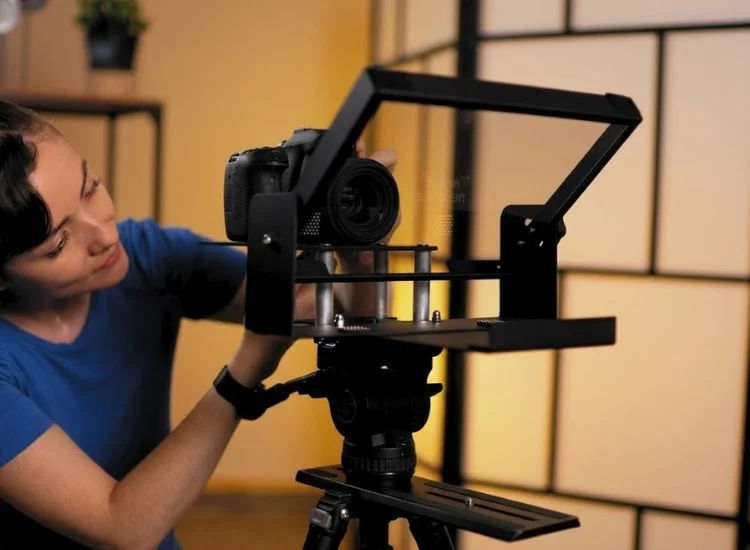
You need one of two setups: a hardware teleprompter or an online teleprompter. A hardware rig uses a beamsplitter glass mounted in front of your camera lens to reflect a script from a screen below it. An online teleprompter, whether you use it as an app or directly in your browser, runs on your phone, tablet, or computer, with no extra hardware required.
Most solo creators, educators, and business professionals only need an online teleprompter, whether that's the Teleprompter.com app or the browser-based version. Hardware rigs matter more for broadcast studios, film sets, and any setup where the camera and presenter sit several feet apart.
If you are still deciding which category fits your budget and use case, see our breakdown of teleprompter devices for every budget and common types of teleprompters.
Whichever path you choose, you'll need:
This process works the same way across teleprompter brands, whether you're using a TeleprompterPad rig or another hardware unit.
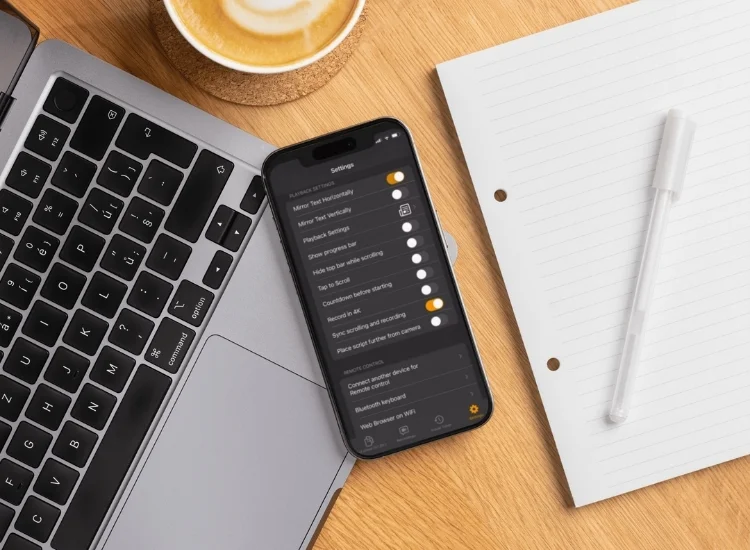
Once the hardware is assembled (or if you're skipping hardware entirely), the rest of the setup happens inside the Teleprompter.com app or its browser-based version.
If you don't have a hardware rig, you can skip the assembly steps above entirely. No glass, no mount, no cover. Open Teleprompter.com, load your script, set your margins, and choose a scroll mode, then prop your phone, tablet, or laptop where your camera would normally be.
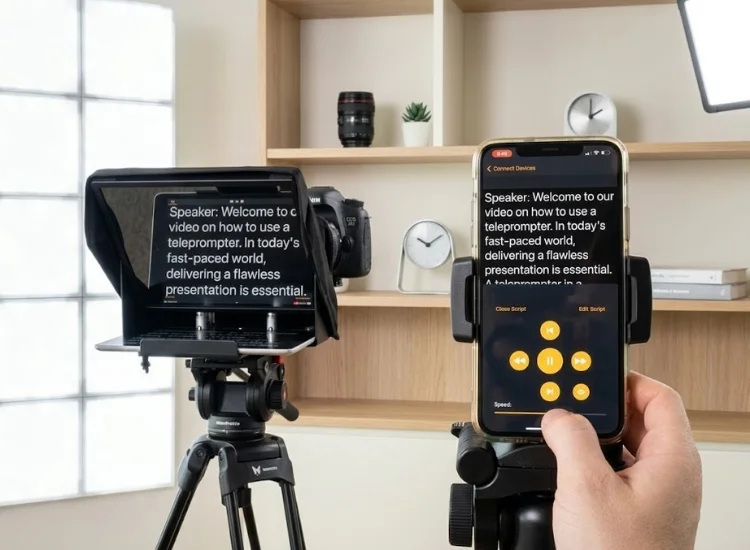
Whether you're running a hardware rig or an app-only setup, a remote control keeps you from touching your recording device mid-take. Pair your phone over an internet connection or Bluetooth. You do not need both devices on the same Wi-Fi network, and pairing is a one-time step.
After that first connection, you can manage scripts, open files, and customize the appearance entirely from your phone. Once paired, you can also adjust scrolling speed and font size on the fly, matching the script's pace to your speaking style without touching the recording device.
Learn more about the full range of supported controls in our guide to remote control integration with external devices.
Getting this part right matters more than it might seem. According to Wyzowl's 2026 State of Video Marketing survey, 89% of consumers say video quality directly affects how much they trust a brand. A shaky camera or a fumbled remote handoff is a quality signal viewers notice immediately, and it's one of the easiest things to eliminate with a proper setup.
Once your setup is configured and tested, the technical part is done. The next challenge is delivery: pacing, eye contact, and sounding natural instead of scripted.
For that, see our full guide on how to use a teleprompter, or go straight to reading tips for a more professional delivery if your setup is already dialed in.
Choose between a hardware rig with a beamsplitter glass or an online teleprompter with no extra hardware. For hardware, mount the unit, attach your camera, add the glare cover, and insert your script device. For an online teleprompter, open the app or your browser, load your script, set your margins and mirroring, and choose a scroll mode. Either way, pair your phone as a remote before you start recording.
No. The Teleprompter.com app, or the online teleprompter in your browser, is enough for most recordings. Hardware rigs with a beamsplitter glass are only necessary for broadcast studios or multi-camera film production, where the camera sits at a distance from the presenter.
Attach your camera to the mount on the back of the teleprompter unit using the provided screws, then center the lens directly behind the beamsplitter glass. Keep the lens as close to the glass as possible without touching it, which keeps reflections minimal and your eye line natural. Run a short test recording to confirm the camera sees a clean shot with no visible glare.
Turn off mirroring in your app's Playback Settings if you're reading directly off a phone, tablet, or laptop screen. Mirroring should only stay on when you're projecting the script onto a physical beamsplitter glass.
Glare usually comes from a light source hitting the screen or glass directly. Reposition your lighting, add a physical cover if you're using a hardware rig, or tilt an app-only setup slightly away from overhead light.
A hardware teleprompter uses a beamsplitter glass to reflect a script in front of the camera lens, keeping it invisible on camera. The Teleprompter.com app, or the online teleprompter version in your browser, displays the script directly on a screen near your camera, with no extra hardware or mirror needed.


.png)


.png)