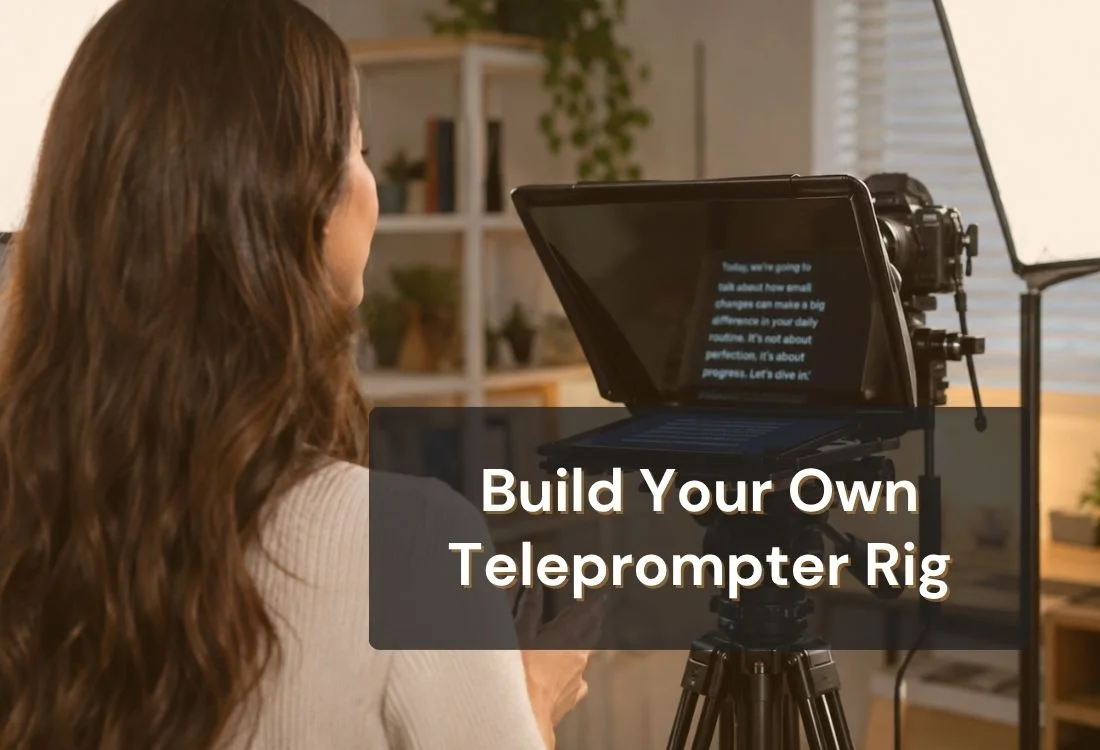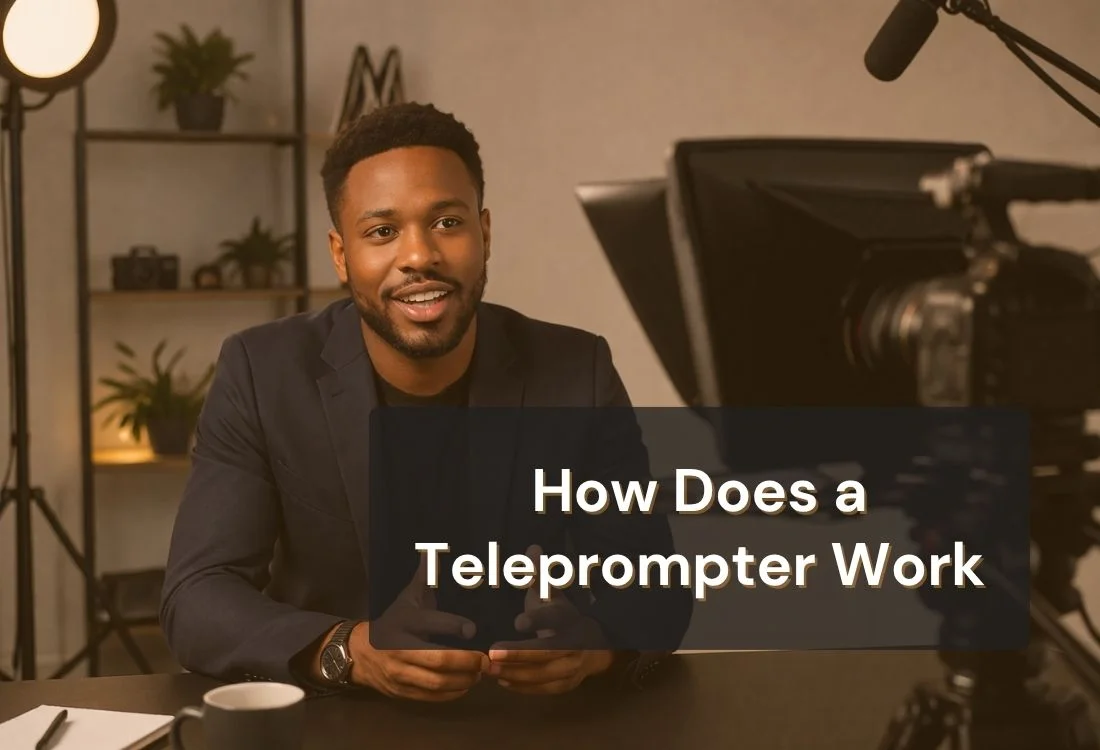


A teleprompter displays a scrolling script in front of, or directly over, a camera lens. The speaker reads their lines while appearing to look straight at the audience. Beam splitter glass reflects the text toward the speaker while staying transparent to the camera, so the script never appears on screen. The result: confident, natural delivery with no memorization required.
That core mechanic has stayed the same since the 1950s. What has changed is everything around it: the hardware, the software, and who uses it. Teleprompters are no longer reserved for TV studios. These days, content creators, educators, executives, and podcasters all use them to record better videos in less time.
This guide breaks down how a teleprompter works mechanically, covers the four main types, and helps you find the right setup for your needs.
TL;DR:
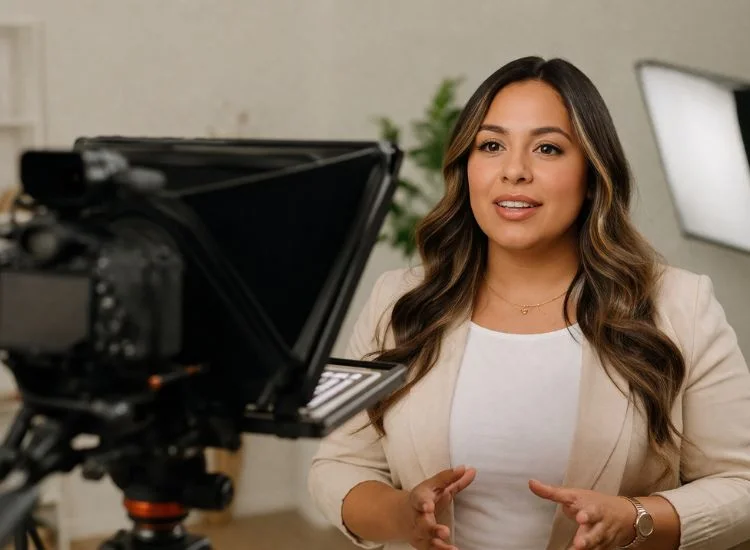
A teleprompter works by using a piece of angled, partially reflective glass placed in front of a camera lens. This glass, called a beam splitter, reflects a bright screen (positioned below or beside the camera) up toward the speaker's eye line. Because the glass is partially transparent, the camera shoots straight through it without picking up the reflected text.
Here is what happens in sequence:
The result is a speaker who appears confident, prepared, and engaged, because they are reading every word, but the audience cannot tell.
This same optical principle applies to all hardware teleprompter types. Software-based teleprompters work slightly differently: the app displays text on a phone or tablet screen that is positioned near the camera, so the speaker reads from the device rather than through glass.
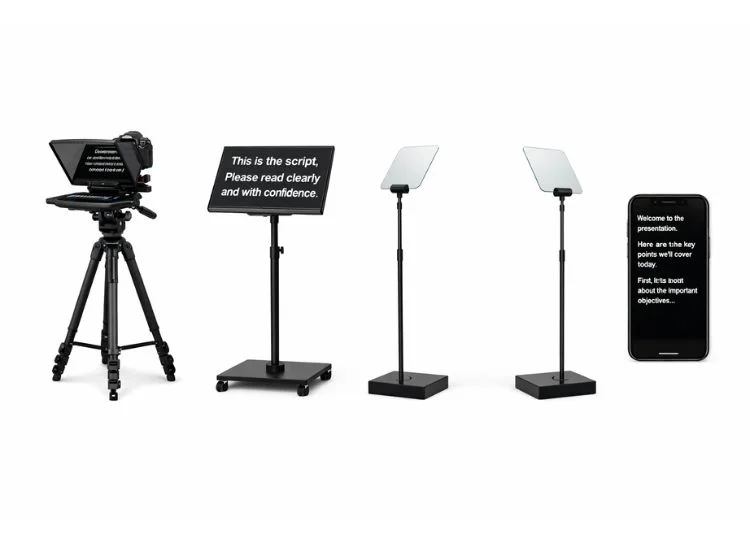
Not all teleprompters work the same way. The four main types serve different use cases, audiences, and budgets. Here is how each one functions.
A camera-mounted teleprompter attaches directly to the front of a camera. The beam splitter glass sits at the end of a shroud that covers the lens, and a monitor mounted below the shroud projects the script upward through the glass. The speaker looks directly through the glass and reads the script while the camera shoots through the same glass from behind.
This is the most popular setup for video production because eye contact with the lens is direct and consistent. News anchors, corporate video teams, and professional content creators use this type most often.
Best for: Studios, newsrooms, corporate video, any situation where the speaker addresses the camera directly.
A floor teleprompter places the screen at ground level, angled up toward the speaker. It can be mounted on a stand, hung at the back of a room, or laid flat on the floor. The speaker reads the text from a distance rather than from directly in front of the camera.
This setup works well for live stage presentations where the speaker needs to move around. However, it is not suitable for on-camera recording, because the speaker's eye line does not align with the camera lens.
Best for: Live auditorium events, theatre, stage presentations.
Presidential teleprompters come in pairs: two transparent glass panels mounted on poles at either side of a podium. Each panel reflects text from a monitor positioned below the podium, so the speaker can alternate eye contact between both sides of the audience.
An operator controls the scrolling from a separate device backstage. This setup requires at least two people to run. It has no use in video recording, but it is the standard choice for live speeches, debates, and high-visibility public events.
Best for: Political speeches, live events, conferences, panel discussions with a live audience.
Software-based teleprompters replace dedicated hardware with a smartphone, tablet, or computer. The app displays a mirrored, scrolling script on the device screen. When paired with beam splitter hardware, the device takes the place of a monitor inside the rig.
Without hardware, the device is positioned near the camera so the speaker can read while recording. This setup is less precise for eye-line alignment, but it is highly practical for solo creators and requires no additional equipment.
Scroll speed, font size, and text color can all be adjusted inside the Teleprompter.com app to match your speaking style. It also supports VoiceGlide voice-activated scrolling, fixed speed control, and remote operation through Bluetooth devices and wearable controls, giving you flexible ways to stay in sync with your script while recording.
For smoother delivery on mobile setups, especially when filming alone, these practical teleprompter tips for recording videos on your phone can help you improve framing, maintain natural eye contact, and reduce retakes when using a smartphone as your primary recording device.
Best for: Solo creators, YouTube, tutorials, e-learning, on-location recording, any setup where portability matters.
For a deeper breakdown of each type, see the full guide to the four most common types of teleprompters.
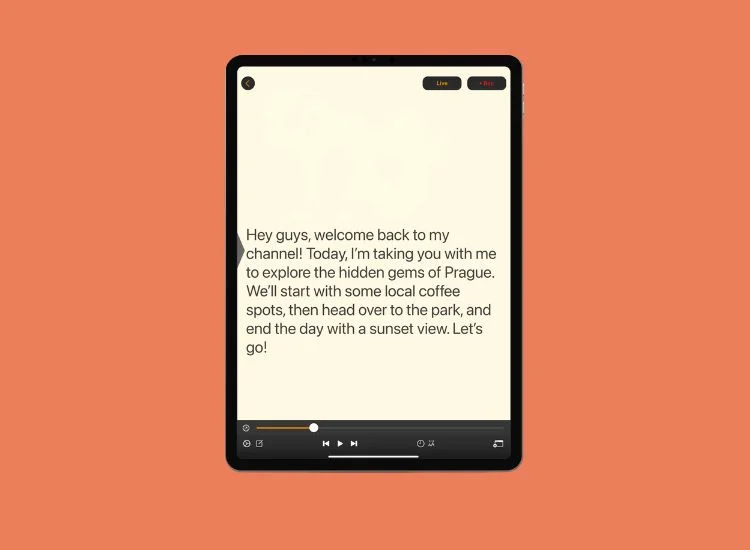
Scroll speed determines how quickly the text moves across the screen. Set it too fast and you rush your delivery. Set it too slow and you pause awkwardly waiting for the next line. Getting the speed right is one of the most important parts of using a teleprompter well.
The average adult speaks at 130 to 150 words per minute in natural conversation. Professional broadcast presenters typically read at 150 to 180 words per minute. Your ideal scroll speed should match your own comfortable speaking pace, not a preset default.
Most teleprompter apps let you control speed in a few ways:
For first-time users, start slower than you think you need to. It is easier to speed up once you are comfortable than to rush through your script and need additional takes.
Teleprompters help anyone who records or speaks on camera look more confident and prepared. The benefits go beyond simply not forgetting your lines.
For a closer look at how creators use teleprompters in their day-to-day workflows, see our guide on teleprompter tips for content creators.
The core function is the same: both display a scrolling script to help you deliver content on camera. The difference is the equipment, cost, and setup time involved.
For most creators, podcasters, and educators recording solo, an app is the practical starting point. If you later need the precision of a camera-mounted rig, apps like Teleprompter.com include a mirror mode that lets your device work seamlessly with hardware beam splitter setups.
For budget-based hardware options at every price point, see the teleprompter devices guide.
The right teleprompter depends on three practical questions.
Who is your audience: camera or live? If you are recording video, you need a camera-mounted or software-based teleprompter. If you are presenting live to a room, floor or presidential setups apply.
Who is operating the teleprompter? Presidential and some floor teleprompters require a separate operator to control the scrolling. Camera-mounted and app-based setups can be managed solo using voice-activated scroll or a remote control.
How far will you stand from the screen? Most smartphone and tablet teleprompter setups are readable at 3 to 12 feet. For longer distances, you need a larger screen:
Reading naturally from a teleprompter is a skill. Most people sound stiff the first time because they are focusing on the text rather than the delivery. A few adjustments fix this quickly.
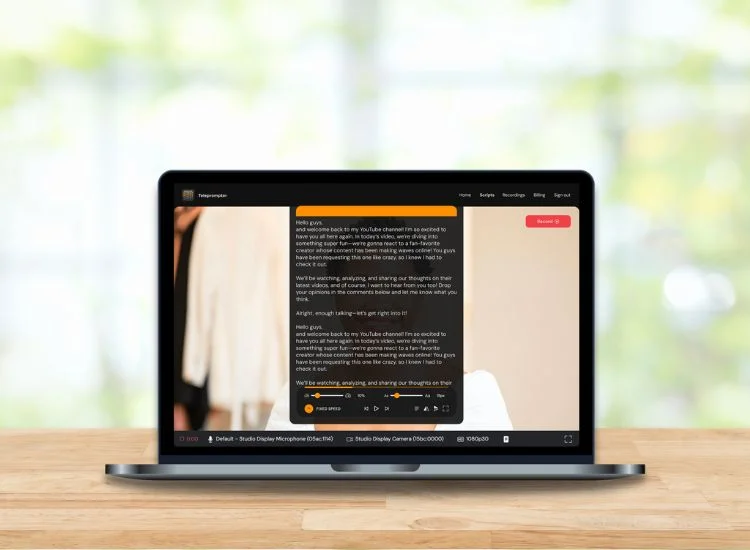
You do not need a beam splitter rig, a camera mount, or even a download to try a teleprompter today.
Teleprompter.com works instantly in your browser on any device: Mac, PC, iPhone, iPad, or Android. Paste your script, set your scroll speed, and you are recording. If you prefer an app, it is available on the App Store and Google Play.
Features available on the free plan include:
A teleprompter works by solving one specific problem: how do you read a script without looking like you are reading a script? Beam splitter glass, scroll speed control, and good script formatting all serve that single goal.
The technology has been around since the 1950s, but the barrier to using it has dropped to near zero. You no longer need a studio rig, a dedicated monitor, or an operator standing beside you. A phone, a tablet, or a browser tab is enough to get the same result that broadcast professionals depend on.
The type of teleprompter you choose matters less than learning to use it well. Start with a scroll speed that feels slightly slower than comfortable. Write shorter sentences. Read ahead of where you are speaking. Give yourself two or three practice runs before you record.
Most people who try a teleprompter for the first time are surprised by how quickly it feels natural. The learning curve is short. The payoff, fewer retakes, stronger delivery, and more confidence on camera, shows up from the first session.
Start with a single action: go to Teleprompter.com, paste your text, and record a first take. Skip the hassle of complicated setup or needing additional gear. See how much one session improves your delivery.
A teleprompter and an autocue are the same technology. "Teleprompter" comes from TelePrompTer Corporation, which patented the device in the United States in 1949. "Autocue" comes from the first UK-based manufacturer, which licensed the technology in 1955. The term you use depends on your region: teleprompter is standard in North America, autocue in the UK and Europe.
A teleprompter app lets you deliver a full script on camera without memorizing any lines, while maintaining natural eye contact with the lens. It reduces re-takes, cuts editing time, and produces more polished results without requiring a production crew or expensive hardware. For solo creators, it is the most accessible way to record professional-quality video.
Teleprompter.com offers various scroll modes (fixed speed, voice-activated scroll, and remote-controlled), full offline support, and the widest remote control ecosystem in its category, including Apple Watch, Bluetooth keyboards, foot pedals, and game controllers. It also includes mirror mode for use with beam splitter hardware, cloud script import, and a built-in AI script generator.
Write your script the way you speak, using short sentences and natural phrasing. Set your scroll speed slightly slower than feels comfortable, and read a few words ahead of where you are speaking. Following punctuation as pacing cues, pausing at commas, breathing at periods, keeps delivery conversational rather than mechanical.
Yes. The main challenge is screen visibility in direct sunlight. For hardware setups, use a monitor with at least 1,000 nits brightness and a shade hood over the screen. For app-based setups, maximize screen brightness and position the device out of direct sun. Overcast conditions are significantly easier to work with than bright daylight.
Software-based teleprompters are designed for solo use. With an app like Teleprompter.com, you paste your script, set your speed, and record, voice-activated scroll adjusts to your pace automatically. Camera-mounted hardware rigs take more initial setup but can also be operated solo. Presidential and floor teleprompters require a dedicated operator and are not suited to solo recording.


.png)


.png)