

Video has become the dominant content format on social media in 2025. In fact, video content is expected to account for 82% of all internet traffic by 2025. With billions of people on social platforms and engaging with video daily, brands are racing to adapt. This article compiles the latest social media video stats and trends – backed by data and studies – to help you understand where things stand in 2025 and how to sharpen your video strategy.
Video is central to social media now and in the future. We'll explore these trends and their meaning for creators and marketers globally.
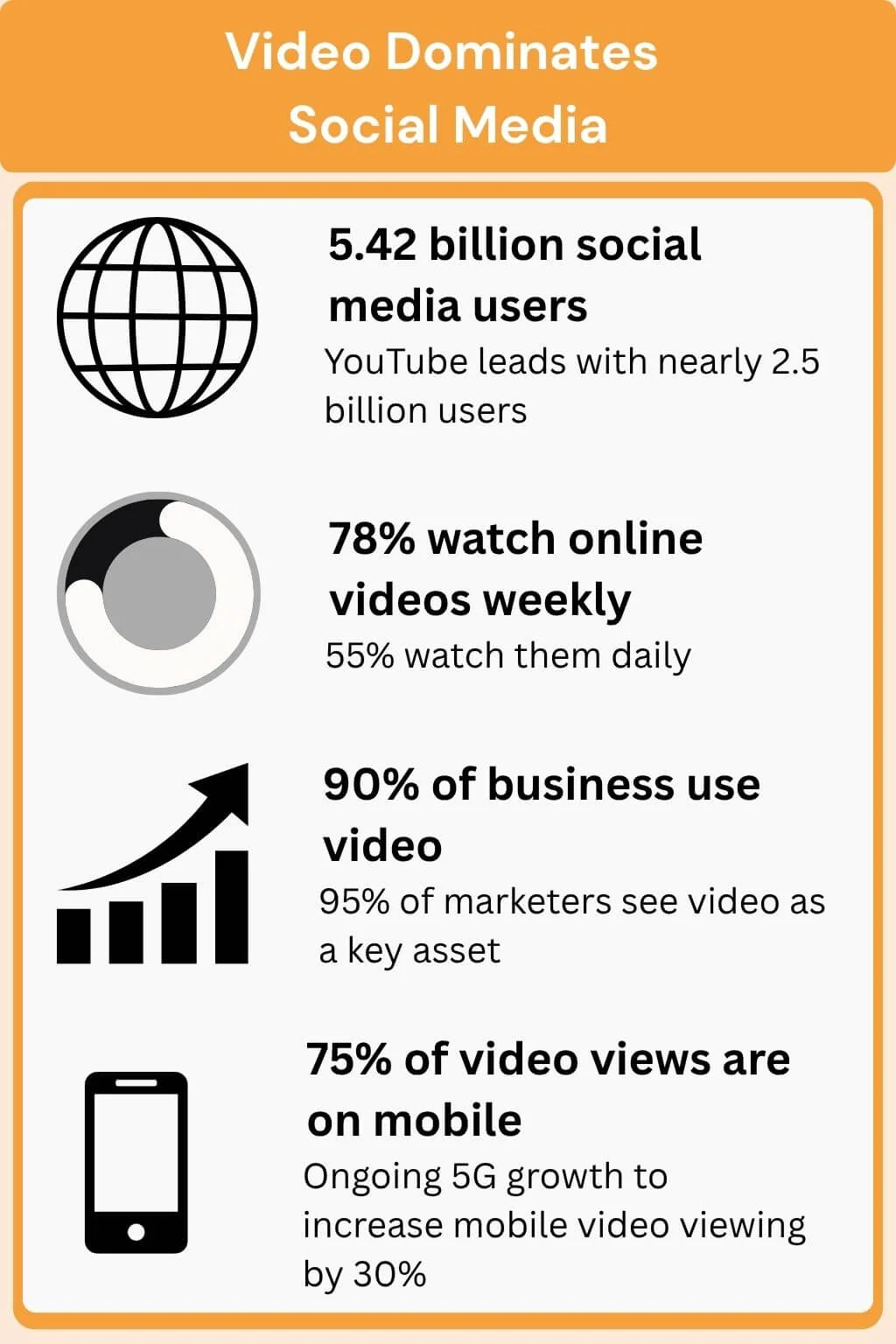
Social media usage is at an all-time high, with an estimated 5.42 billion users worldwide in 2025. Video has become the dominant content format across every major platform. Users are spending more time watching videos than engaging with any other type of content.
The appetite for video is stronger than ever across social platforms:
One driving force behind video’s dominance is its ability to spark engagement:
Mobile usage fuels much of this growth:
Network improvements continue to accelerate this shift:
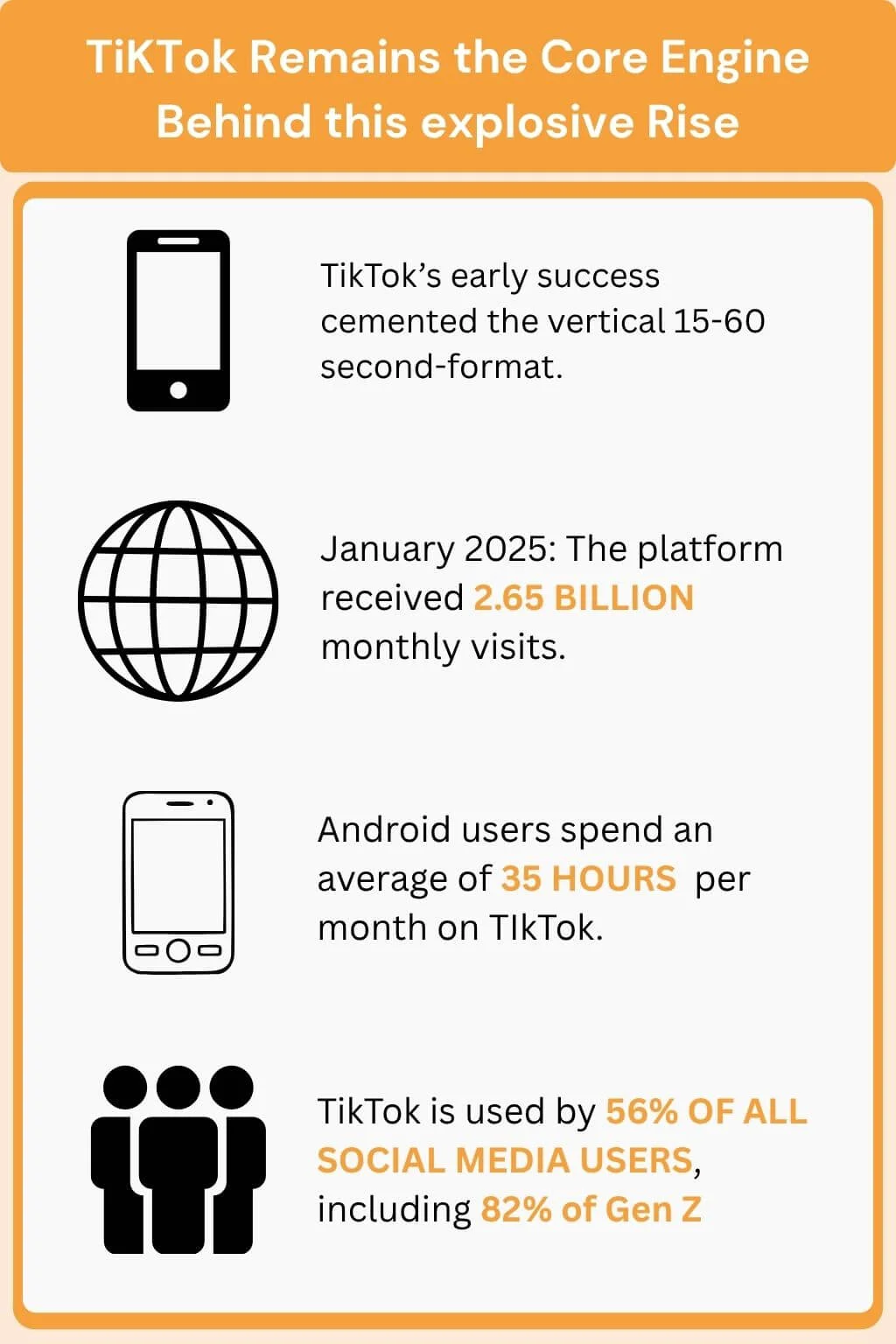
Short-form videos—popularized by TikTok, Instagram Reels, and YouTube Shorts—are driving the biggest shift in social media today. These fast-paced clips, typically just a few seconds to a couple of minutes long, have surged in both creation and consumption.
TikTok remains the core engine behind this explosive rise:
Other platforms are doubling down on short videos as well:
Short-form still leads, but the definition of “short” is shifting:
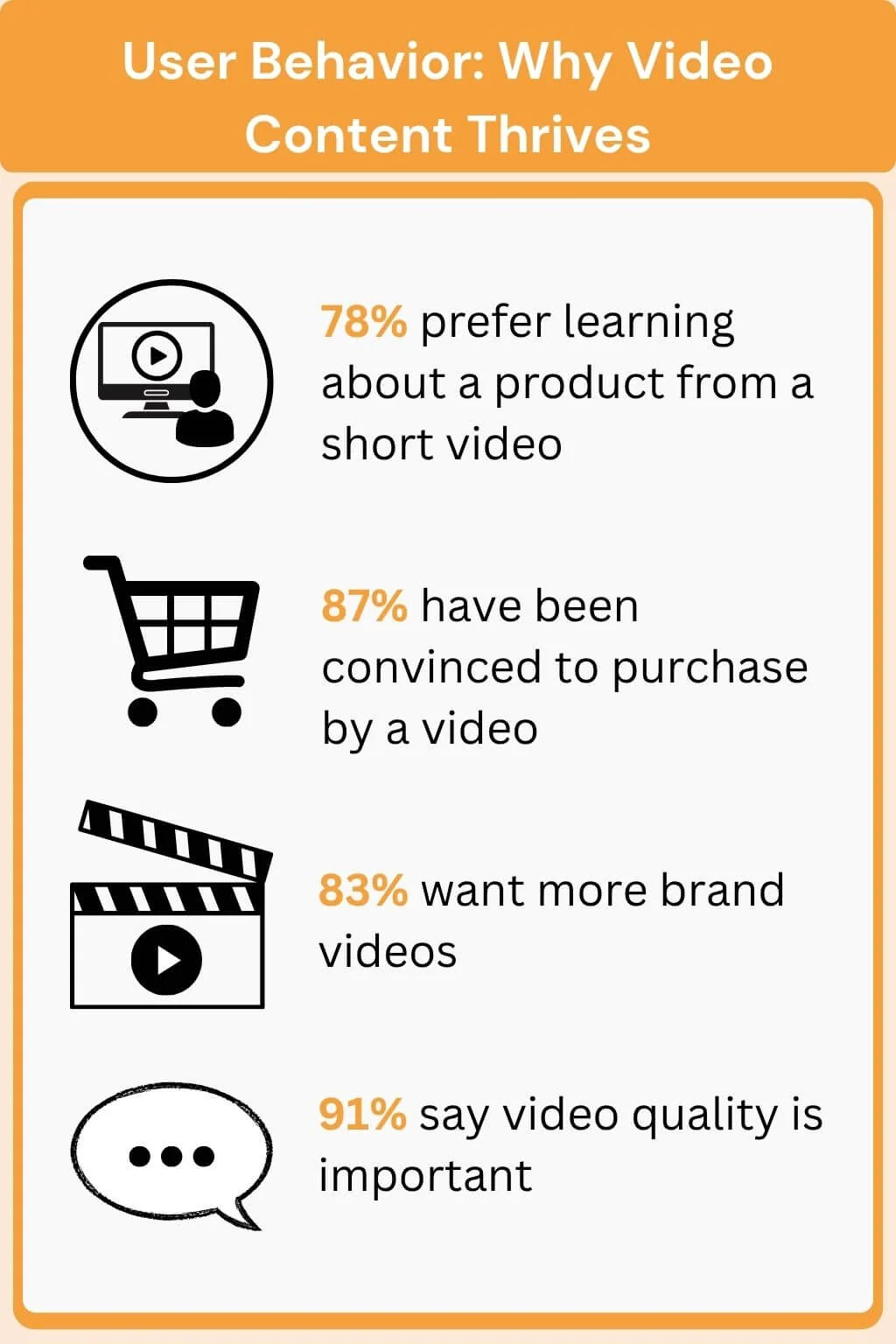
People overwhelmingly prefer video when learning, exploring, or evaluating new information. Across industries and platforms, video consistently outperforms other formats because it’s easier to understand and far more engaging.
Consumers prefer video over any other content format:
Video strongly influences purchase decisions:
Audiences actively want more video from brands:
Video fuels genuine social interaction:
Marketers have fully embraced video, and the numbers show why. With consumers gravitating toward video across every platform, businesses are investing heavily in creating content that informs, persuades, and drives action.
Video adoption is nearly universal among marketers:
Video marketing continues to deliver exceptional ROI:
Brands are increasing their investment in video:
Platform-specific video trends are shaping content strategy:
Marketers are tailoring video lengths and formats to match viewer behavior on each platform. While short-form remains dominant, slightly longer clips often outperform ultra-short ones when they deliver value.
These findings challenge the old belief that shorter is always better. In 2025:
Every major social media platform has its own video ecosystem and trends in 2025:
As the world’s second-largest social platform, YouTube is all about video. It caters to both short and long-form content. Notably, over half of YouTube users actually prefer longer videos (over a minute, like tutorials or vlogs) from brands, with short 30–60 second clips being their second choice.
This indicates YouTube remains a place for deep dives and richer storytelling, even as Shorts gain popularity. For marketers, a mix of concise and longer content can work here. Also, mobile rules on YouTube – about 70% of YouTube views come from mobile devices, so optimizing for mobile viewing (titles, thumbnails, captions) is crucial.
Meta’s platforms are heavily video-focused now. Facebook integrates video in feeds, Stories, and Watch, and its algorithm favors content that keeps people on the platform (video often does). Facebook Reels (short videos similar to TikTok) are relatively new but growing; larger Facebook pages tend to get more total views on Reels, but smaller pages often see higher engagement rates.
Interestingly, Facebook Live videos around 30-40 minutes have been found to be the most engaging live format on that platform – showing that interactive live video still has a place. Instagram has transitioned from a photo app to a video-centric platform with Reels and Stories.
Over 500 million Instagram accounts use Stories every day, and one-third of the most-viewed Stories are from businesses, highlighting Instagram as a key channel for brand video content. Engagement on Instagram Reels is highest for those short videos in the 1-minute plus range, as mentioned, and creators frequently repurpose TikToks to Reels to maximize reach.
TikTok remains the trend-setter for viral short videos and creative challenges. It’s the top platform for Gen Z discovery and engagement. Over 54% of TikTok users engage with branded content daily, which is huge – users aren’t shying away from brand accounts; if anything, they expect entertaining content from them.
For brands, TikTok rewards a less polished, more authentic style – and participation in trends. Given TikTok’s enormous usage stats (billions of visits and hours watched monthly), it’s often where cultural moments start before spilling over to other networks.
The professional network has quietly become a strong video platform for B2B and thought leadership content. 70% of video marketers now use LinkedIn for video distribution, making it the most widely-used video platform among video marketers in a recent survey (surpassing even Facebook).
LinkedIn’s algorithm favors content that sparks conversations, and informative videos (e.g. industry insights, how-tos, interviews) can perform well. As noted, engagement actually increases with slightly longer videos here, as the audience is willing to invest time in valuable content. If your brand targets professionals or B2B, LinkedIn video might be a goldmine in 2025.
Since rebranding from Twitter to X, the platform is emphasizing multimedia as well. While traditionally text-centric, X saw an average of 8.3 billion video views each day in 2024. Short native videos and clips of live events/news do especially well.
X is still used heavily for real-time updates and discussions (nearly 60% of X users use it to get news, but incorporating video clips can boost visibility in the feed. Brands often post teaser videos on X that link out to longer content or use video for customer service explainers.
In summary, every platform has adapted to the video era in its own way, and successful content strategies recognize these nuances. Whether it’s a 15-second meme on TikTok, a 2-minute product demo on LinkedIn, or a 10-minute vlog on YouTube, there’s a place for various video styles within the broader social media landscape of 2025.
The 2025 data confirms that social media and video are inseparable. Global users are watching, sharing, and demanding more video, and platforms are prioritizing it. For businesses, video is essential for visibility and competitive edge, offering strong ROI for engagement and sales.
To succeed, focus on videos that entertain, educate, or inspire, tailoring the length and style to each platform. Maintain high quality and authenticity, as viewers judge your brand based on your video content.
Consider tools like Teleprompter.com to streamline production, ensuring confident delivery without excessive retakes. With video dominating social media in 2025, efficient content creation resources are crucial to meet demand.
Video is the engine of social media engagement. By understanding these trends, you can strategize effectively. Hit record now and join the video-first revolution.
Resources:
Invisia: Video Marketing Statistics You Must Know In 2025
Sprout Social: 80+ Must-know social media marketing statistics for 2025
Wyzowl: Video Marketing Statistics 2025
GWI: Social media statistics for brands in 2025
Statista: Number of daily active Instagram Stories users from October 2016 to January 2019


.png)


.png)