

Public speaking can feel intimidating for many beginners, but it’s one of the most valuable skills you can develop. Whether you’re giving a short presentation, leading a meeting, or speaking at an event, the ability to express ideas clearly and confidently can change how others perceive you. The good news is that confident speakers aren’t born, they’re trained through preparation, awareness, and practice.
This guide shares the best public speaking tips for beginners to help you calm your nerves, improve your delivery, and connect with your audience. With hard work and the right attitude, you can speak confidently and make a lasting impression every time you take the stage.
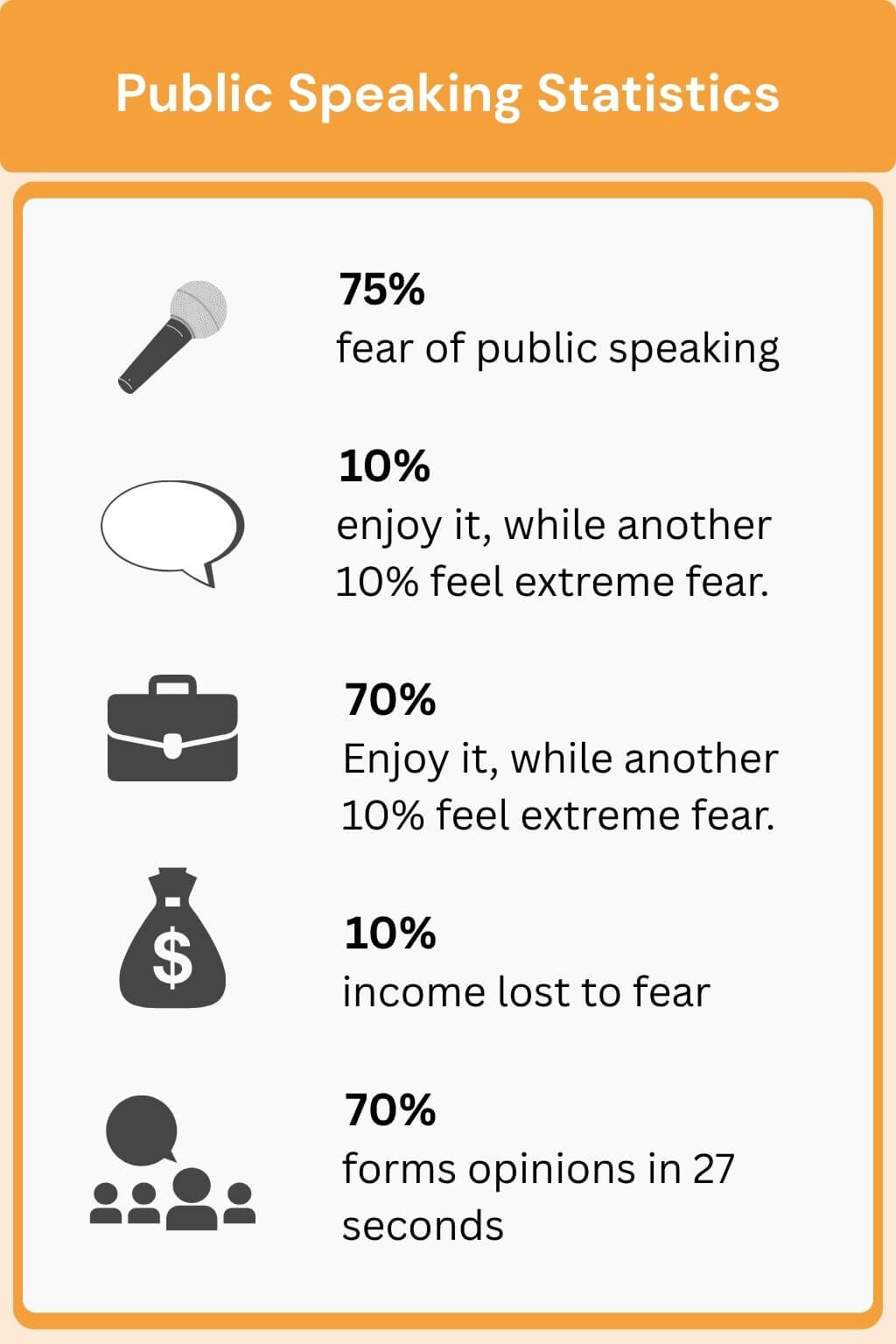
Many people fear speaking in front of others, yet strong presentation skills are more important than ever. Here are the key numbers:
These insights highlight that public speaking isn’t just a personal hurdle—it has real professional and social impact. Improving your delivery and message clarity can make a significant difference.
For more detailed statistics related to public speaking, check out the guide at Public Speaking Statistics.
Improving your public speaking takes practice, patience, and preparation. These beginner-friendly tips will help you overcome stage fright, sharpen your communication skills, and deliver speeches that keep your audience listening.

The foundation of great public speaking is knowing who you’re addressing and why you’re speaking to them. Before you begin crafting your speech, take a moment to define your audience and your message.
Ask yourself:
Understanding these details helps you create content that feels personal and relevant. A presentation to executives might need facts, data, and concise delivery. Speaking to students might require storytelling and humor.
Your purpose acts as the backbone of your talk. It keeps you from drifting off-topic and helps you connect emotionally with listeners.
Try to sum up your whole speech in just one short sentence. It retains your attention on the main idea and makes sure that every point supports it.
When your purpose aligns with your audience’s needs, your words carry weight and your confidence grows.

Stage fright is one of the most common challenges beginners face. The good news is that nervous energy can actually work in your favor if you know how to manage it.
Here are a few practical techniques:
Even well-known speakers have struggled with fear. Warren Buffett famously took public speaking classes to overcome anxiety early in his career. What made the difference was consistent practice and preparation.
Pro Tip: Turn nerves into energy by viewing them as excitement instead of fear. Your body reacts the same way to both, it’s your mindset that makes the difference.
Overcoming stage fright doesn’t happen overnight, but every time you speak, your confidence grows stronger.
Learn practical ways to manage anxiety and build confidence in our guide on using a teleprompter app to overcome stage fright.

If you don't have enthusiasm and control when you give a great message, it could not work. The way you talk, including your tone, pace, and body language, may make a boring presentation into something people will remember.
Focus on these essentials for strong speech delivery:
Expert insight: Body language doesn’t just signal confidence to the room—it can also help you access it. In Amy Cuddy’s TED Talk on body language and confidence, she explains that adopting a more confident posture—even when you don’t feel it yet—can increase feelings of confidence and help you perform better in high-pressure moments.
Pro Tip: Record your practice sessions. Listen to your tone, pacing, and emphasis. Watching yourself helps you identify small habits, like filler words or awkward gestures, that you can refine before your presentation.

Even a well-prepared speech can lose its spark if the audience tunes out. Engaging your listeners means creating moments of connection throughout your talk.
Here’s how to maintain their attention:
According to Stanford Marketing Professor Jennifer Aaker (Stanford University),
“Stories are remembered up to 22 times more than facts alone.”
Including personal anecdotes keeps your audience engaged and helps them retain your message more effectively.
Pro Tip: Treat your audience as part of the conversation, not passive listeners. Speaking with them, not at them, builds trust and energy.
Strong audience engagement turns a simple speech into an experience. It’s what separates excellent speakers from unforgettable ones.
Practice is what turns a nervous beginner into a confident speaker. Great speakers aren’t naturally gifted, they refine their presentation skills through repetition and reflection. Practicing with intention helps you identify your strengths and areas to improve.
Here’s how to practice effectively:
Consistency is essential. Practicing for as little as 10 minutes daily will significantly improve your voice control and increase your comfort level with the material.
Pro Tip: Schedule short, focused rehearsals instead of one long session. Frequent repetition helps you retain key points and feel more natural when you deliver your speech.
Accurately gauging your speech's length is crucial; our guide on 2-minute speeches can help you stay within your time limit.
Even experienced presenters make mistakes, but beginners can avoid many of them with awareness and preparation. Knowing what to look out for helps you stay composed and professional.
Some common mistakes are:
Mistakes happen, but how you handle them matters more than the error itself. If you lose your place or mispronounce a word, pause, smile, and move on confidently.
Pro Tip: Prepare a backup plan for unexpected issues, such as having printed notes or memorizing key transitions. Preparation builds resilience and keeps your presentation on track.
Preparation shapes the quality of your performance. It's not just writing your speech but also managing everything that affects how your message is delivered and received. The more thorough your preparation, the smoother your presentation will feel.
Here’s how to get ready effectively:
Plan for interruptions. Have backup materials and stay calm when facing the unexpected.
A teleprompter app can enhance every stage of your preparation and delivery. It helps you present with confidence by displaying your script at a comfortable pace while keeping your eyes aligned with the audience. Instead of glancing down at notes or memorizing paragraphs, you can maintain eye contact, focus on tone, and stay connected throughout your talk.
With Teleprompter.com, you can control scrolling speed, edit scripts in real time, and use features designed for both live presentations and recorded videos. It’s a reliable tool for anyone who wants to communicate with clarity, accuracy, and composure.
Pro Tip Use the app during practice to refine pacing and again during your live speech for steady delivery. This ensures consistency from rehearsal to presentation.
If you want a deeper framework to guide your process, explore our detailed guide on public speaking preparation strategies.
Becoming a confident public speaker takes time and consistent effort. With these public speaking tips for beginners, you can build stronger presentation skills, reduce stage fright, and connect meaningfully with your audience.
Confidence grows through preparation, mindful practice, and using the right tools. Teleprompter.com helps you present with poise—guiding you through your script smoothly so you can focus on engaging your audience.
Enhance your delivery today with Teleprompter.com and experience how professional communication can feel effortless.
Start with short speeches, record your practice, and join groups like Toastmasters. Consistent feedback helps you improve quickly.
Begin with simple topics you enjoy. Practice in front of friends or a camera to build confidence and control nervous energy.
Maintain eye contact, stand tall, and use open gestures. A clear voice and steady pace project confidence and control.
Prepare your speech, practice regularly, and focus on one key message. Simplicity keeps your audience engaged and attentive.
Yes. It helps you follow your script smoothly while keeping natural eye contact, improving flow and confidence on stage.


.png)


.png)