

Stage fright is your body's fight-or-flight response kicking in the moment you feel watched and judged, whether that's a live audience or a camera lens pointed at your face. It shows up as a racing heart, shaky hands, and a mind that suddenly goes blank, and it affects far more people than most assume.
Stage fright sits on a spectrum, and it's a less dominant fear than the internet tends to suggest. You've probably seen the claim that public speaking is people's number one fear, ahead of death itself. Chapman University's most recent Survey of American Fears puts that myth to rest: only 33.7% of Americans say they're afraid or very afraid of public speaking, a far cry from its reputation as the ultimate universal fear. For most people in that group, it's ordinary performance anxiety, the kind that fades once you're a minute or two into speaking. (Source: Chapman University Survey of American Fears, 2025 Key Findings)
For a smaller group, it crosses into a specific phobia called glossophobia, severe enough to make people actively avoid speaking opportunities rather than just dread them.
That distinction matters more than the label. Ordinary nervousness, as noted above, is common and doesn't require treatment. But if stage fright is consistently costing you opportunities, a promotion you didn't go for, a video you never posted, a talk you turned down, that's worth addressing directly rather than pushing through indefinitely. The "How to Overcome Stage Fright" section below covers what to do in both cases.
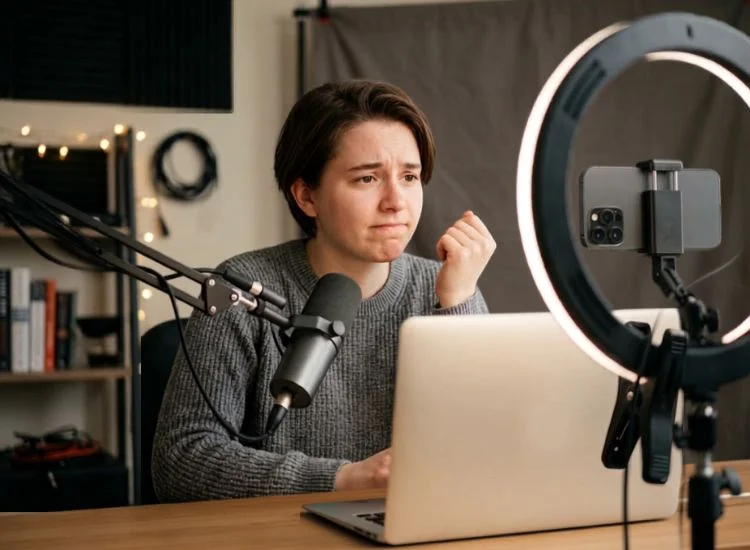
Camera anxiety and stage fright run on the same underlying mechanism: your nervous system reads being watched as a threat. But recording on camera adds a few triggers a live stage doesn't have. There's no live audience to read and adjust to in real time. Your mistakes get preserved, not just witnessed once and forgotten. And you often have to perform to an empty room, talking to a lens instead of a face.
An Advanced Dermatology survey found that 85% of people say seeing themselves on video calls makes them more self-conscious about their appearance, with many fixating on how tired or stressed they look on screen. (Source: Advanced Dermatology "Zoom Boom" Survey, 2021).
If you've ever felt more anxious recording a video alone than giving the same talk to a room full of people, this is a big part of why: a camera doesn't just watch you, it shows you yourself while it does. The fix is largely the same as it is for stage fright: preparation, practice, and removing as many unknowns as possible before you hit record.
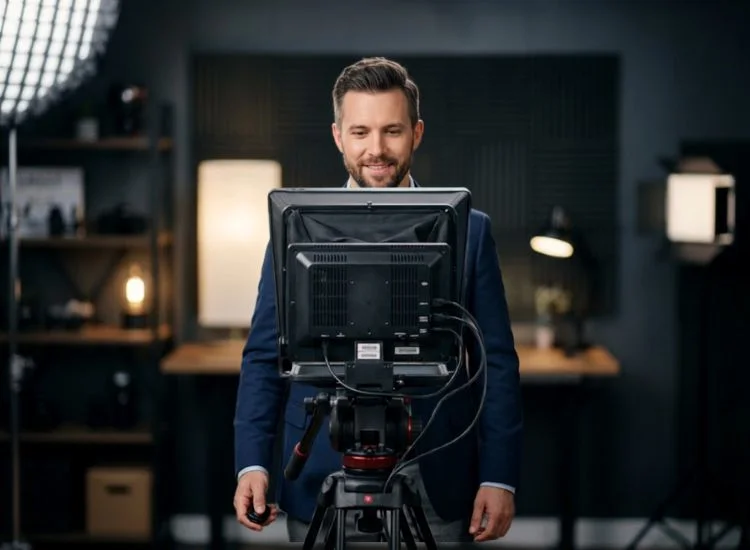
A teleprompter removes one of the biggest unknowns directly, the fear of forgetting your next line, which is one reason it shows up so often in tips for content creators trying to get past camera anxiety specifically.
Public speaking anxiety rarely comes from one single source. It's usually a combination of psychological patterns, a physical stress response, and a few compounding personal factors.
A lot of what causes a fear of the spotlight comes down to the spotlight effect itself, a well-documented tendency to believe you're being watched and evaluated far more closely than you actually are. Add in a fear of judgment or a fear of making a visible mistake, and the brain starts treating a presentation the same way it would treat an actual threat.
Once your brain registers that threat, your body follows. Stage fright triggers the same fight-or-flight response your body uses to react to real danger: your heart rate climbs, your breathing gets shallow, your mouth goes dry, and your hands may shake. None of this means you're in real danger. It means your nervous system is doing exactly what it's designed to do, just in a situation that doesn't actually require it.
A few factors tend to intensify stage fright for specific people:
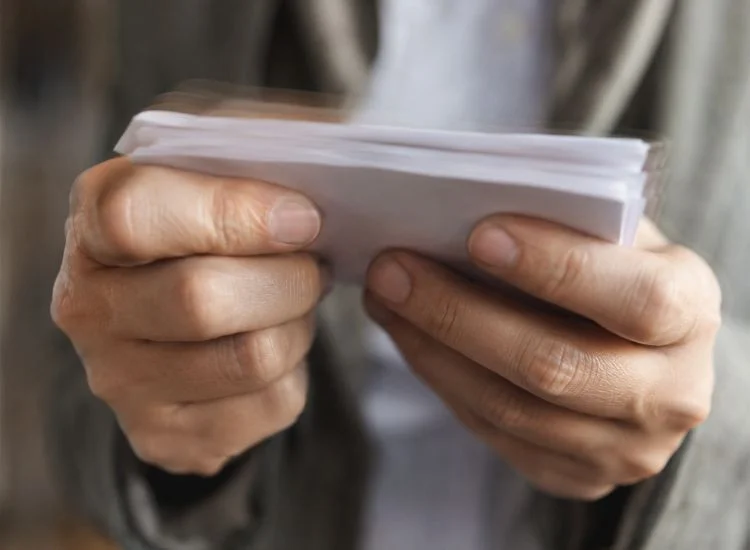
Symptoms of stage fright generally fall into three categories, and most people experience some combination of all three at once:
Overcoming stage fright isn't about eliminating nerves completely. It's about reducing them to a level where they don't control your performance.

Real Teleprompter.com users describe this exact shift once they stop worrying about their lines. As one review puts it:
"Thanks for making it easier to be in front of a camera! Stage fright is real! You make it easy!" glowinthedark4, iOS App Store review, January 2026
For most people, stage fright doesn't disappear completely, and that's normal. What changes with practice is your relationship to it. Experienced speakers still feel a spike of adrenaline before going on. The difference is they've learned to read that spike as readiness rather than danger, and enough repetition makes the fear smaller each time.
Stage fright is a normal, well-understood response, not a flaw and not something you have to white-knuckle through forever. Understanding what's actually happening in your body when it hits is the first step. Preparation, breathing techniques, reframed self-talk, and removing controllable variables like the fear of forgetting your place all compound over time.
For a deeper look at using a teleprompter specifically to manage this, see our guide on overcoming stage fright with a teleprompter app.
Ready to remove one more variable from your next presentation? Try Teleprompter.com Free
No. Ordinary stage fright is not a mental health diagnosis. In its more extreme form, it can qualify as a specific phobia called glossophobia, which falls under social anxiety disorder, but most people who feel nervous before speaking don't meet that threshold.
Both play a role. Some people appear to have a natural predisposition toward anxiety in evaluative situations, while for others it develops entirely from experience, such as one bad presentation or a critical audience early on.
Yes. It's common for someone who spoke comfortably for years to develop anxiety after a specific triggering event, like a talk that went badly or a high-stress period that coincided with a big presentation.
They share the same fight-or-flight mechanism, but camera anxiety adds unique triggers: no live audience feedback, a recording that persists, and often an empty room instead of visible faces to read.
Deep, slow breathing is the quickest physical reset. Combine it with a reminder of your preparation ("I know this material") to calm both the physical symptoms and the anxious thoughts at the same time.
Yes, for a specific reason: they remove the fear of forgetting your material, which is one of the biggest anxiety triggers people report. That frees up mental bandwidth to focus on tone, pacing, and eye contact instead of recall.


.png)


.png)