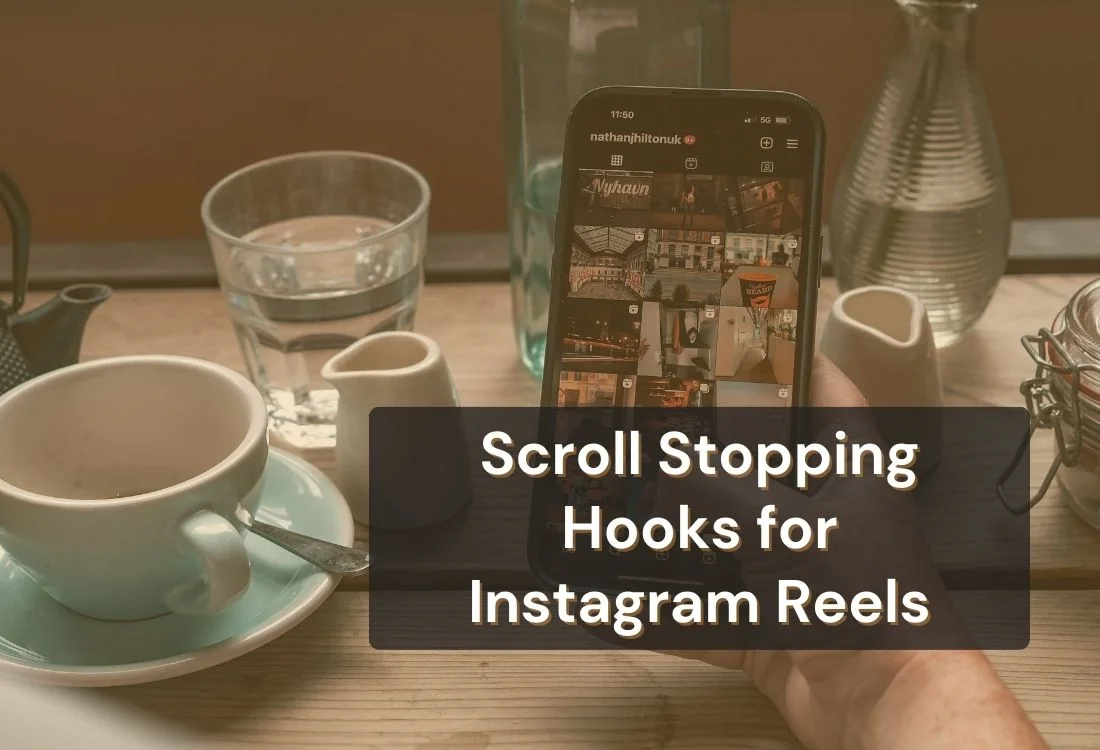


A strong hook for Instagram Reels earns the next two seconds. It stops the scroll, sets expectations, and gives viewers a reason to keep watching. When your opening lands, your watch time climbs, your completion rate improves, and your Reel gets more reach.
This guide gives you hook formulas, plug-and-play examples, and short scripts you can record cleanly using Teleprompter.com so your delivery stays confident and natural.
Hooks for Instagram Reels are the first words, visuals, and on-screen text that pull attention fast. A hook makes a clear promise. It signals value, entertainment, proof, or curiosity in a single beat.
Strong Reels hooks usually include:
Instagram now gives you clearer proof that the opening matters. In 2025, Instagram rolled out a Retention Metrics for Reels and expanded reporting around early drop-off with Skip Rate, which tracks how many people leave within the first 3 seconds. That makes your hook a measurable driver of reach, not a stylistic choice.
Meta also stresses that strong Reels “nail the hook within the first few seconds,” because that is when viewers decide if the video is worth watching.
Instagram ranks Reels heavily on viewer behavior. The first seconds influence:
A clean hook also makes your Reel easier for search, recommendations, and AI summaries because the topic becomes obvious right away. Clear speech plus clear text helps Instagram indexing and improves visibility for voice search, featured snippets, and LLM answers.
Use this structure to write hooks fast and make your opening instantly clear.
Call out who this is for or what situation they are in. This filters in the right viewers and boosts retention.
Examples:
State the payoff in plain words. Keep it focused on one win.
Examples:
Add one reason to trust you or preview the method. Keep it to a single line.
Examples:
When these three pieces work together, your first line reads cleanly as on-screen text, matches what viewers hear, and makes your topic easier to index in Instagram search.
Use these formulas to write opening lines fast. Swap the bracketed words to fit your topic. For best results, keep the hook under 12 words, place the outcome first, and match your on screen text to your first sentence.
Use this when you have a simple fix or shortcut. Lead with the action so viewers feel progress immediately.
Example: “Do this before your next client call.”
Use this for tutorials and processes. Numbers signal structure and make the content feel easy to follow.
Example: “Follow these 3 steps to plan a weekly menu that sticks.”
Use this when people feel stuck and want a clear reason why. Pair it with a quick fix right after.
Example: “This is why your resume gets ignored in the first 10 seconds.”
Use this when results matter. Start with the outcome, then explain the method.
Example: “This 2 minute cleanup routine cut my weekend chores in half.”
Use this when your audience holds a limiting belief. Replace it with a simpler truth.
Example: “Stop believing you need expensive gear to start podcasting.”
Use this for repeatable guidance. A single rule feels memorable and shareable.
Example: “Use this one rule to write emails people actually reply to.”
Use this to build trust quickly. Share one change and one measurable result or clear benefit.
Example: “Here’s what changed after I switched to a 30 minute study block.”
Use this when you can show a fast demo. Tools make your hook feel concrete and practical.
Example: “Use this free spreadsheet trick to track expenses without stress.”
Use this when your audience relates to a moment of pressure or emotion. It creates instant connection.
Example: “POV: you walk into an interview and your mind goes blank.”
Use this for planning, prep, and decision making. Checklists earn saves because people want to reuse them.
Example: “Here’s the 5 point checklist I use before booking a flight.”
Use this when viewers struggle to find the right words. Give them a sentence they can copy.
Example: “Say this: ‘If you want ___, start with ___.’”
Use this when you want punchy, shareable lines. Constraints force clarity and reduce rambling.
Example: “Write your pitch in 7 words like this.”
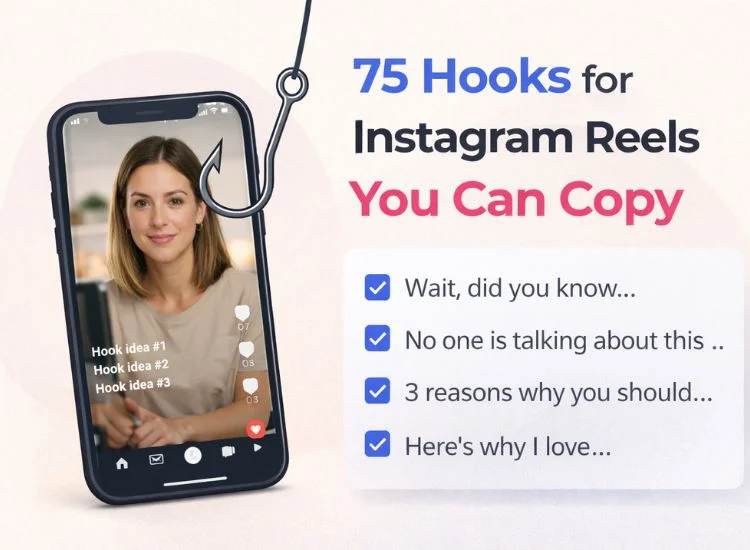
Use these as opening lines, voiceover starts, or on screen text. Swap the bracketed parts to match your niche.
Use these to spark instant interest and keep people watching for the reveal. They work best when you can quickly explain the “why” or show the result right after the first line.
Use these when you can deliver a fast, practical tip. They attract busy viewers because the payoff sounds simple and immediate.
Choose one:
Pick one angle from this list:
Write three versions that say the same promise. Keep them short. Record all three. Post the one that feels cleanest.
Make your first line and your text identical. This improves clarity, accessibility, and indexing.
Use micro beats:
A hook is not only words. Use a visual thumb stopper:
Keep the first frame readable. Avoid clutter. Keep text high contrast and large.
Instagram search pulls signals from your caption, your on screen text, and your spoken words. When those three match, Instagram understands your topic faster and shows your Reel to the right viewers.
Build captions that support your target keyword with this simple structure:
Example caption:
“Client onboarding scripts that convert faster.
Use one clear promise, show the next step on screen, then end with one action your viewer can take today.
Steps:
"Comment ‘SCRIPT’ and I’ll send the template.”
Add related phrases naturally across your caption and on screen text so Instagram can index the topic: opening line, scroll stopping, increase watch time, viewer retention, on screen text, short form video script, video script template, talking head video, caption strategy.
If you want a faster way to write captions that follow this structure, try the Instagram Caption Generator. Paste your topic, choose your tone, and and get caption options you can tweak and post right away.

Hooks fail when delivery feels hesitant. Scripts help. Reading off camera breaks eye contact. Teleprompter.com solves that by keeping your words near the lens so your opening lands with confidence.
Use simple testing rules:
If your hook sounds unsure, people skip. Teleprompter.com helps you hit your first line cleanly while keeping eye contact, so your Reel starts strong and stays easy to follow. Sign up, paste your script, and record in minutes with fewer retakes and a steadier delivery.
Strong hooks for Instagram Reels come from clarity, not extra effects. Lead with the outcome, match it as on screen text, and deliver the first proof or step immediately. Build a small swipe file of hooks that perform, then reuse the structures that lift retention.
If you want faster filming and cleaner delivery, write your first line first and read it with steady eye contact using Teleprompter.com. Record three hook variations, post consistently, and let retention data guide your next script.
A good hook makes the topic and payoff clear in the first sentence. Start with the outcome, name who it is for, and hint at the method or proof. Match the same line as the on-screen text so viewers and search can understand it instantly.
Keep your hook 7 to 12 words, or about 1 to 2 seconds spoken. Short hooks reduce skips and help viewers grasp the promise immediately. Put the benefit first, then move straight into the first step or example so the Reel feels useful right away.
Use repeatable templates like “If you want [result], do this,” “Stop doing [mistake], do this instead,” or “Here are 3 ways to [goal].” Swap the bracketed words for your niche. These templates keep your content consistent and make scripting faster when you batch film.
Record confidently by keeping your script near the lens so your eyes stay steady. A teleprompter app like Teleprompter.com lets you read naturally while looking at the camera. Use one clean sentence, remove filler words, and start speaking immediately to avoid a slow warm-up.
Your hook works when fewer people leave early and more viewers stay through the middle. Check skip behavior in the first seconds, then review your retention curve, average watch time, and shares or saves. If drop-off spikes early, rewrite the first line to be more specific.


.png)


.png)