

YouTube remains a dominant force in 2025, with billions of users and an unparalleled volume of content consumption. This article breaks down the latest YouTube statistics—from user counts and watch time to demographic breakdowns and revenue—to illustrate the platform’s global impact.
All data is backed by recent studies and reports for accuracy. Below are some of the top YouTube stats for 2025:
With billions of monthly users, YouTube is the world’s second-most used social platform (just behind Facebook) and the second most visited website globally after Google. In early 2025, YouTube’s monthly active user base reached about 2.70 billion people. This means over 25% of the world’s total population uses YouTube in a given month, and roughly half of all internet users are on YouTube.
By some analyses, YouTube even edges out other networks in active usage – for example, its user base is about 16% larger than WhatsApp’s and notably larger than Facebook’s when considering total reach. In fact, YouTube’s potential advertising reach is estimated at 2.53 billion users (among adults), slightly higher than Facebook’s ~2.28 billion.
Such an enormous audience also makes YouTube one of the top web destinations in general. As of mid-2025, YouTube.com sees around 47 billion visits per month, second only to Google’s 101 billion monthly visits. Users tend to stay engaged when they visit: on average, people view about 8–9 pages per visit on YouTube, and the site’s bounce rate (the percentage who leave after one page) is the lowest among top websites at just ~31.5% – indicating that most visitors continue to watch or click on more videos once they start.
YouTube’s global reach has grown tremendously over the past decade, though it’s starting to plateau as it approaches saturation. For context, YouTube had about 2.0 billion users in 2019 and around 2.3 billion in 2020. By 2023 it reached roughly 2.68–2.70 billion users. The increase from 2023 to 2025 was only about 20 million additional users (~0.7% growth) – a much slower growth rate than the double-digit jumps seen in earlier years like 2018–2020.
This slowing growth is expected for a platform that already connects billions; essentially, YouTube has captured almost every potential user in markets where it’s available. (Notably, YouTube is blocked in a few countries such as China and Iran, which limits absolute global numbers.) Still, YouTube remains an ever-present part of online life for nearly everyone else.
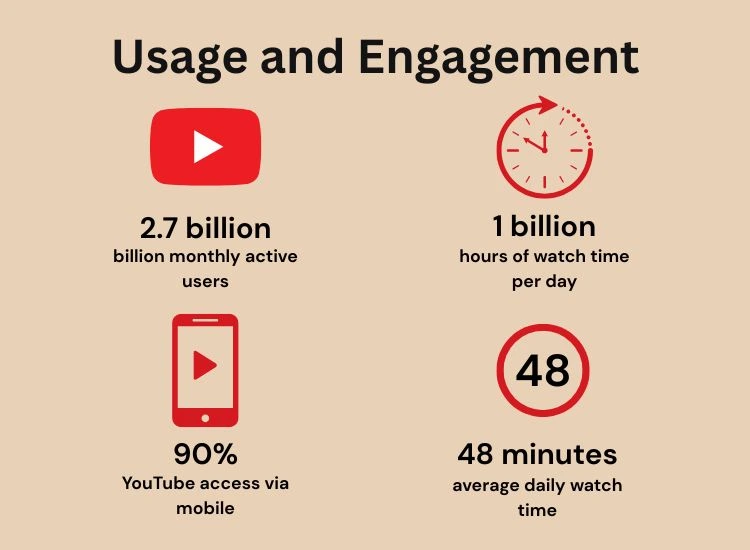
YouTube’s engagement is as impressive as its user base. The platform logs at least 122 million daily active users (DAUs) on average. Collectively, these users watch over 1 billion hours of video content every day. To put that in perspective, each day people around the world consume roughly 5 billion YouTube videos. This unparalleled usage makes YouTube the leader in online video consumption by a wide margin.
The average user spends about 48 minutes per day on YouTube. This is up slightly from ~47 minutes the year before, showing that individuals are dedicating a considerable portion of their day to watching YouTube content. Typically, this viewing is broken into sessions – an average session on YouTube lasts around 19 minutes before a user leaves the platform. In other words, many users might watch a couple of videos per sitting, multiple times a day, adding up to nearly an hour a day spent on YouTube.
It’s also worth noting how dominant YouTube is in terms of total attention. According to global digital reports, people worldwide spend almost twice as much total time on YouTube as they do on the next closest platform (TikTok). In fact, YouTube commands a larger share of global social media time than TikTok and Instagram combined.
This reflects not only YouTube’s huge user base but also the depth of engagement – users often watch longer-form content (like music videos, tutorials, vlogs) that can run 10 minutes or more, whereas TikTok and Instagram favor shorter clips.
The amount of content on YouTube is staggering and continues to grow at a breakneck pace. As of 2025, over 500 hours of video are uploaded to YouTube every minute. That means in just one day, more than 720,000 hours of new videos are added. The platform now hosts an estimated 800 million videos in total covering every topic imaginable.
This massive library is served by a vast creator community – YouTube counts more than 113 million channels created by users worldwide. (For context, there are also about 65 million active content creators as of 2025, which suggests many individuals operate multiple channels or some channels are inactive.) The sheer volume of content ensures that viewers can always find fresh videos, but it also underscores the competition among creators for attention.
YouTube consumption is heavily skewed toward mobile devices. Nearly 90% of YouTube visits globally come via mobile (smartphones or tablets) as of late 2022. Only about 10% of traffic now comes from desktop computers. In the United States, around 70% of YouTube users access the platform through their phones.
This reflects the broader trend of mobile internet use and the convenience of watching videos on the go. It also explains YouTube’s emphasis on mobile-friendly features (like vertical video Shorts). In line with this, the YouTube mobile app has been downloaded over 10 billion times on Android devices alone – an indicator that the app is on virtually every smartphone in active use.
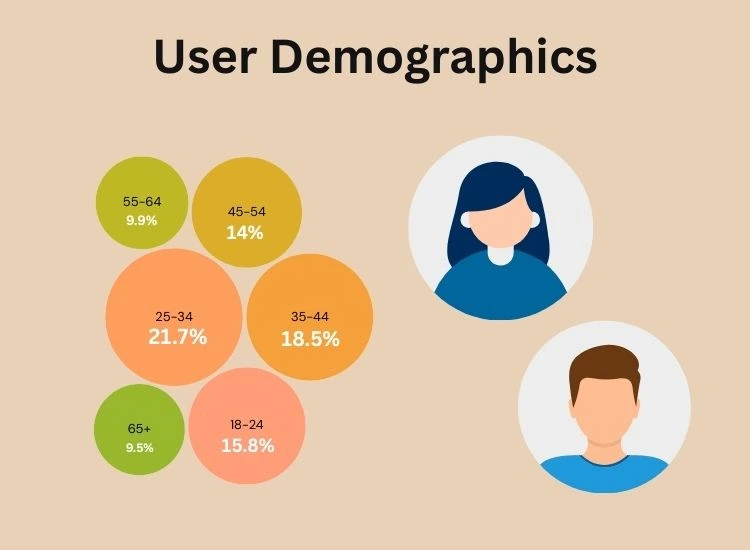
YouTube’s audience spans virtually all age groups, making it a truly mainstream platform. In 2025, the largest segment of YouTube’s user base is young adults in their mid-20s to early 40s. Specifically, about 21.7% of users are ages 25-34 and another 18.5% are 35-44. Combined, roughly 40% of all YouTube users are between 25 and 44 years old – prime working-age adults who likely grew up with the platform or adopted it in its early years.
The next notable segment is youths: 15.8% of users are 18-24, highlighting that a significant chunk of young internet users are on YouTube (even though this stat doesn’t count under-18 minors, who also use YouTube in large numbers, often through supervised accounts or YouTube Kids).
Importantly, YouTube’s appeal extends to older audiences as well. About 19.4% of users are 55 and older. This means nearly one in five YouTube users is a baby boomer or senior – a testament to the platform’s broad range of content (from news to DIY videos to classic music) that attracts all generations.
Many older adults have embraced YouTube for learning and entertainment, especially as smart TVs and tablets make access easier. In summary, YouTube’s user demographics are broad-based, with a tilt toward the 18-44 range but a solid presence in both the teen/young-adult cohort and the 50+ age group. The diversity in age groups underscores YouTube’s role as a go-to source of content for just about everyone.
In terms of gender, YouTube’s global user base skews slightly male – about 54.3% male vs 45.7% female. This ~54/46 split indicates a fairly balanced reach among genders (the gap is not very large). It’s worth noting that in some countries the balance differs. For example, in the United States, women actually make up a slight majority of YouTube’s audience at 51.2%, compared to 48.8% male.
Globally, however, men are a slim majority of users. This could be influenced by usage patterns in certain regions and content genres that might skew male. Overall, though, YouTube reaches almost half of all men and almost half of all women using the internet, which shows its broad appeal across demographics.
YouTube is truly a global platform, but its reach is especially prominent in certain countries. Asia leads by sheer numbers – particularly India, which now boasts the largest YouTube audience in the world.
As of 2025, India has approximately 491 million YouTube users. This reflects India’s huge population and growing internet access, as well as the popularity of YouTube for everything from music videos to educational content in India’s many languages. India’s YouTube user base is almost twice that of the United States, which has about 253 million users and is the second-largest market.
Following India and the U.S., the next biggest audiences are found in Brazil (about 144–147 million users) and Indonesia (~139–143 million). These figures highlight YouTube’s strength in large, populous countries. Other countries in the top ten include Mexico (~84 million), Japan (~79 million), Pakistan (~66 million), Germany (~65 million), Vietnam (~63 million), and the Philippines (~58 million). Many of these are emerging markets where YouTube serves as a primary entertainment platform.
Top 10 countries by number of YouTube users in 2025. India leads with nearly 491 million users, followed by the U.S., Brazil, and Indonesia.
What’s striking is the global penetration in some smaller countries. In terms of percentage of the population using YouTube, a few nations stand out even if their total user counts are lower. For instance, Saudi Arabia has the highest YouTube penetration rate in the world – about 95.8% of Saudis use YouTube. In other words, virtually everyone with internet access in Saudi Arabia is on YouTube.
Similarly, Israel (93.3%) and Singapore (91.8%) have extremely high usage rates. Countries like Sweden, Ireland, Spain, South Korea, and Australia all report around 88–89% of their population as active YouTube users. These figures show that in many developed (and some developing) markets, YouTube is nearly ubiquitous – it’s a daily habit for the vast majority of people. Whether for streaming music, watching vlogs, following news, or kids’ entertainment, YouTube has become ingrained in everyday life across continents.
It’s also notable that YouTube’s reach spans regions despite differences in language and culture. Localized content and creators in each country have helped drive adoption. For example, the rise of huge channels like T-Series in India or popular Brazilian vloggers demonstrates YouTube’s localization.
Even where YouTube faces competition from local platforms, it often remains a top choice. (One exception is places with government blocking – e.g., YouTube is officially blocked in China, so Chinese users primarily use other services. Yet, globally, YouTube’s numbers still dwarf any single-country platform.)
Beyond user counts and views, YouTube’s business side reveals how significant the platform is in the digital economy. YouTube’s advertising revenue has been climbing year over year, reflecting both increased viewership and improved monetization. In 2024, YouTube generated roughly $36.1 billion USD in ad revenue, according to industry reports – a hefty 14.6% increase compared to 2023.
For reference, YouTube brought in about $31.5 billion in 2023 (itself up ~8% from $29.2 billion in 2022). This means YouTube alone accounts for a sizable chunk of Google/Alphabet’s overall revenue, underlining how important the platform is to the company’s finances. The growth in 2024 suggests that advertisers continue to invest heavily in YouTube, likely due to its vast reach and the effective targeting options for reaching specific audiences via video ads.
On the consumer side, YouTube has successfully launched paid subscription services. The flagship offering, YouTube Premium, gives users ad-free viewing, background play, and access to YouTube Music. As of 2025, over 125 million people subscribe to YouTube Premium (this figure includes both paid subscribers and those on trial plans. This is a substantial jump from just a few years ago – for instance, there were around 80 million Premium subscribers in 2022.
The growth of Premium indicates a segment of users willing to pay for an enhanced experience and suggests an increasing revenue stream beyond ads. Additionally, YouTube’s paid services ecosystem includes YouTube Music and YouTube TV. YouTube Music is bundled with Premium, while YouTube TV (a live TV streaming service in the U.S.) had about 7.9 million subscribers as of 2024. These numbers show that while ad revenue is still YouTube’s mainstay, subscription models are gaining traction.
YouTube’s monetization extends to content creators as well. The platform’s YouTube Partner Program allows creators to earn a share of ad revenue from their videos. By 2025, millions of creators are monetizing their content, and some top YouTubers earn eight-figure incomes annually.
As an indicator of the scale: a few years back (2020), the highest-earning YouTube channels each made on the order of $20–30 million in a year. Those numbers have likely grown with the expansion of ad spending. YouTube also enabled other revenue streams for creators, such as channel memberships, Super Chat, and merchandise shelves, making the platform a central part of the creator economy.
The 2025 YouTube statistics paint a picture of a platform that is immense in scale and still growing in influence, even if user growth is slowing in percentage terms. With 2.7 billion+ users worldwide, YouTube connects a large chunk of humanity to an endless library of video content. People are spending more time than ever on the site, watching and uploading content at volumes that were hard to imagine a decade ago.
YouTube stands out as the premier online video platform globally and ranks among the top social media platforms in terms of popularity. Its immense reach is a key factor in its success. Economically, YouTube is a powerhouse, generating substantial revenue and supporting a thriving community of creators and advertisers.
A few key trends emerge from these stats:
As we move forward, YouTube in 2025 and beyond will likely continue to dominate online video. While new platforms (like TikTok) have captured attention, YouTube’s deep catalog, broad demographic reach, and integration with Google’s ecosystem give it a resilient position. These statistics underscore that YouTube is not just a video site – it’s a foundational pillar of the modern internet landscape, shaping how billions of people learn, laugh, and stay informed every day.
For more insights into how video drives engagement across platforms, explore the detailed Video Marketing Statistics article.
Resources:
Global Media Insight: YouTube Statistics
DemandSage: How Many People Use YouTube?
The Social Shepherd: Essential YouTube Statistics
DataReportal: Digital 2025: Global Overview Report
Semrush: Most Visited Websites in the World


.png)


.png)