Emotional storytelling in video means building relatable characters, real conflict, and sensory detail into a script, then delivering it so it feels natural on camera. Most creators get the script right and lose the emotion in delivery: rushed pacing, flat eye contact, and a voice that sounds like it's reading rather than telling.
Emotional storytelling in video is a narrative approach that uses relatable characters, a clear conflict, and sensory details (sound, lighting, pacing) to make viewers feel something specific, rather than simply informing them. It works because video engages sight and sound at once, so a story told on screen lands faster and stays longer than the same story told in text.
Brands, documentary filmmakers, educators, and nonprofits all lean on this approach for the same reason: a viewer who feels something is more likely to keep watching, remember the message, and act on it. But the story is only half the job.
How you deliver it on camera decides whether that feeling actually reaches the audience or gets lost in a flat, rehearsed read. (For a closer look at when a narrative approach beats a straight informational script, see story versus script in video content.)

A video built around a specific emotion holds attention longer than one that just states facts, because emotional content is processed and stored differently by the brain than plain information.
A peer-reviewed neuroscience study measuring viewer facial expressions and attention found that video content carrying emotional weight is recalled significantly more often than content that simply conveys information (Source: The Emotional Effectiveness of Advertisement, Frontiers in Psychology, 2020). That's the entire case for emotional storytelling in one line: viewers don't just watch it, they keep it.
This is also why a technically well-shot video can still underperform. A tutorial that only lists steps competes with every other tutorial. A tutorial that opens with a real moment of frustration before solving it gives viewers a reason to stay and a reason to remember who solved it.
The same recall gap shows up off camera too. In persuasive storytelling in public speaking, a well-placed story is what makes a speech stick after the room empties, for the exact same reason.
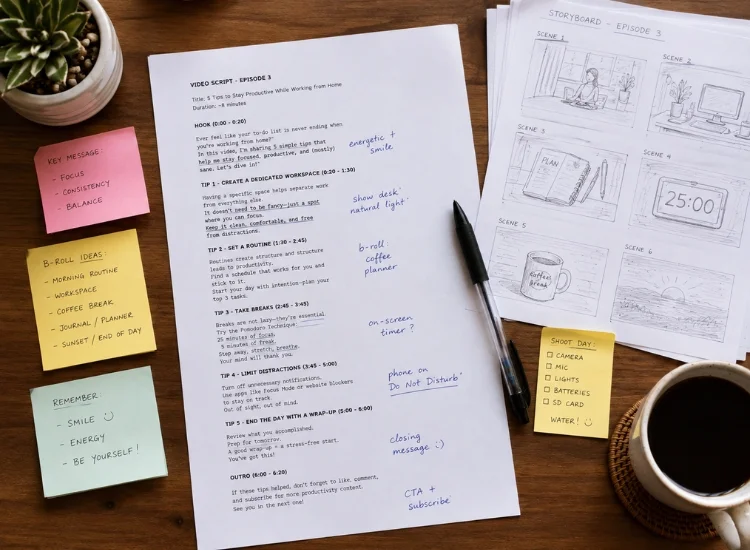
Before you touch a camera, the script needs five things in place. Skip any one of them and the emotional arc feels thin, even with great lighting and sound.
Getting these five right is scriptwriting fundamentals applied to a specific goal: making the viewer feel one clear thing by the end. If you want more depth on structuring the narrative itself, the guide to video storytelling techniques covers the broader craft beyond the emotional angle.

Here's the part most articles on this topic skip entirely: a perfectly written emotional script still falls flat if the delivery sounds like someone reading off a page. Viewers pick up on stiffness fast, even when they can't name what feels off.
Three delivery habits separate a video that lands emotionally from one that doesn't:
A 2024 EEG-based study on marketing videos found that content built around one consistent emotion reaches the same level of viewer engagement in less time than content that mixes several emotions together (Source: Viewer Engagement in Response to Mixed and Uniform Emotional Content in Marketing Videos, 2024). In practice, that means a short, focused, single-emotion delivery beats a longer video trying to hit sadness, then hope, then urgency, all in one breath.
Pace-matched scrolling solves exactly this problem. Here's how one Teleprompter.com user described the effect:
"The auto-scroll follows my pace. Slower when I want emphasis and then faster for urgency." — Thesuzmom, App Store review, July 2026
This same control shows up in talking head video delivery generally, not just emotional scenes: the difference between a face-to-camera video that feels natural and one that feels read almost always comes down to pacing. For a deeper breakdown of controlling script speed for emotional delivery, that guide covers ideal pacing, scroll settings, and quick practice drills for matching your natural rate.

Emotional storytelling works because it's persuasive, and that's exactly why it can go wrong. A video that stirs sadness or anger with no resolution and no substance behind it reads as manipulative once the viewer notices, and they usually do.
The fix is simple: give the story a real resolution, or an honest, reflective ending if a tidy resolution isn't true to the situation. Respect the viewer's intelligence, let the conflict feel real, and don't manufacture stakes that aren't there. Authenticity is what separates a story that builds loyalty from one that burns trust the moment it's over.
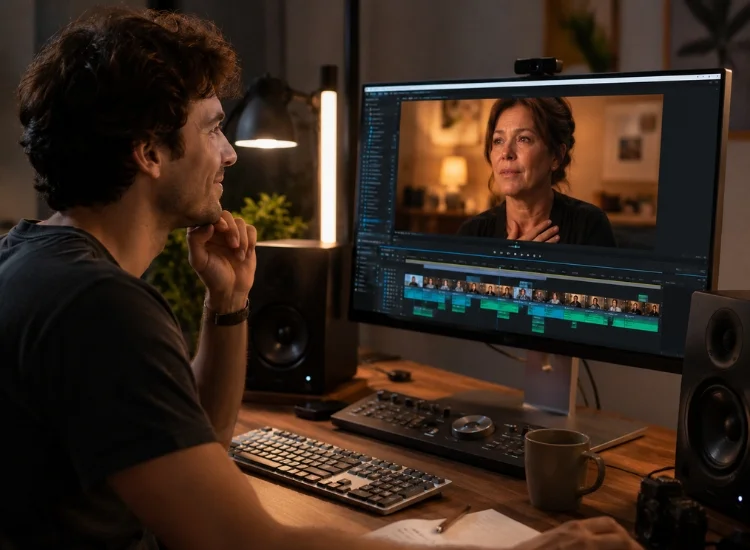
A well-built script gets you halfway there. The other half is what happens when the camera is rolling: whether your pacing gives a quiet moment room to breathe, whether your eyes stay with the viewer instead of a page, whether the emotion you wrote actually reaches the person watching or gets flattened by a rushed, scripted read.
That's the part most guides on emotional storytelling skip, and it's usually the difference between a video that gets watched and one that gets felt. Write for one emotion, build the scene around it, then deliver it at your own pace instead of a fixed one. The story does the setup. The delivery is what closes it.
It's a narrative approach that uses relatable characters, real conflict, and sensory detail to make viewers feel a specific emotion, rather than just informing them. The goal is a felt connection, not just a watched clip.
Pick one primary emotion, such as hope, relief, or determination, and build the entire script and delivery around it. Videos that stay focused on a single emotion hold attention as well as those mixing several, in less time.
Open with a relatable struggle, show real stakes, and deliver the story with natural pacing and steady eye contact instead of a rushed, scripted read. Consistency across videos also builds attachment over time, since viewers come to recognize your voice and pacing.
One. Research on viewer engagement shows a single consistent emotion reaches the same engagement level as mixed emotional content, but faster, which matters most in short-form video.
Not if the pacing matches your natural speech. A fixed scroll speed can feel stiff, but a pace-matched mode like VoiceGlide follows your actual delivery rhythm, so pauses and emphasis land the way they would if you weren't reading at all.
Look for a real moment of struggle followed by a resolution: a first attempt at something hard, a customer's before-and-after, or a behind-the-scenes look at overcoming a setback. The strongest ideas usually come from real experience, not an invented scenario.


.png)


.png)