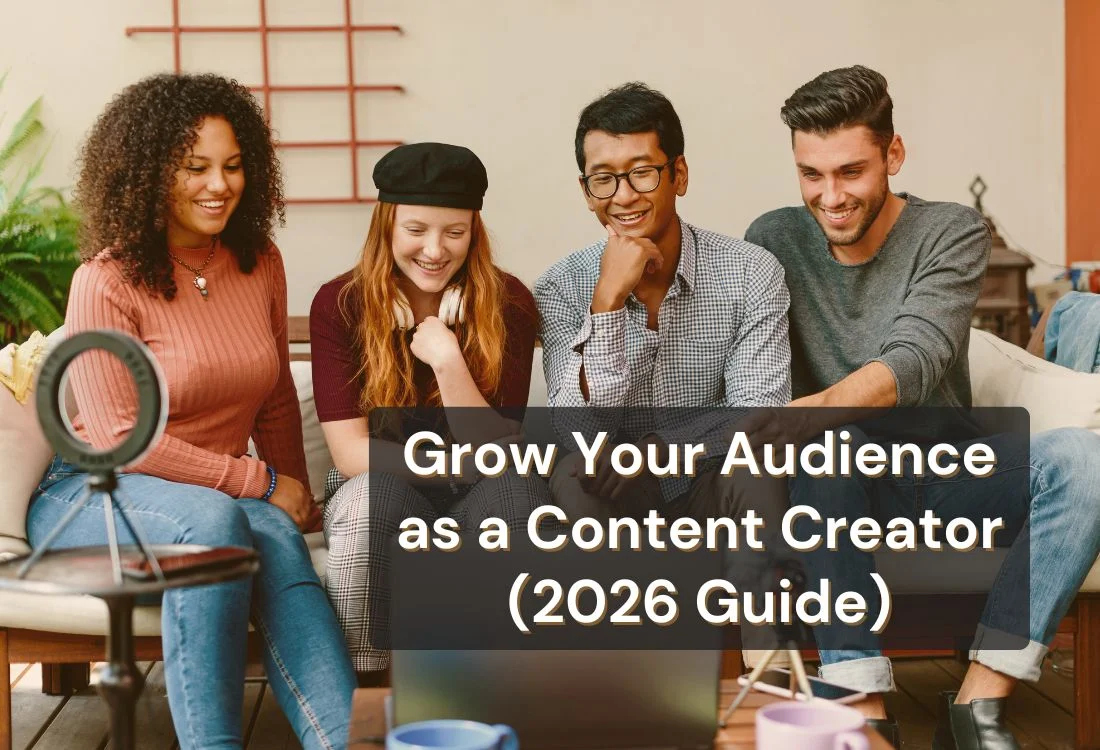


Building an audience in 2026 works differently than it did even two years ago. Follower count no longer guarantees reach, platforms run separate ranking systems for different content formats, and the advice to simply "post consistently and engage" needs a lot more specificity to actually work.
To build an audience as a content creator means matching a proven growth framework to how platforms actually work right now, not the assumptions creators relied on a couple of years ago.
Audience growth still rests on the same five pillars it always has, but what changed is how each one plays out in practice:
TikTok's algorithm now evaluates every video against a small test audience regardless of follower count. YouTube treats Shorts and long-form as two separate audience systems. Instagram runs four distinct ranking systems, one per surface. Working through these five steps with 2026's actual mechanics in mind is what separates creators who grow from creators who post into silence.

Your purpose statement is the filter that decides who joins your audience and why they stay. Before you publish anything, get clear on what you're trying to achieve and what values hold your future community together. A defined purpose keeps your content aligned with your mission and attracts the right people instead of a random crowd that won't stick around.
Keep it short enough to say out loud: what you make, who it's for, and why it matters to them. Revisit this line whenever you're deciding what to post next. If a piece of content doesn't serve the purpose, skip it.

Understanding your audience means knowing what they like, what motivates them, and where they spend their time now, not where creators assumed audiences lived a few years ago. Public feeds are more crowded than ever, so audiences are splitting their attention between open platforms and private spaces: Discord servers, Telegram channels, closed Facebook groups, and other subscriber communities. Some of your most engaged, highest-value audience may never show up in your public follower count at all.
Before picking a platform, get specific answers to a few questions: What problem does your content solve for this audience? What format do they already consume in this niche? Are they concentrated on one platform or spread across several? The answers shape everything that follows.
Picking a platform means understanding what each one currently rewards, not just where your audience happens to scroll.
Pick one primary platform where your specific audience is concentrated, and treat any others as secondary distribution rather than splitting your effort evenly from day one.
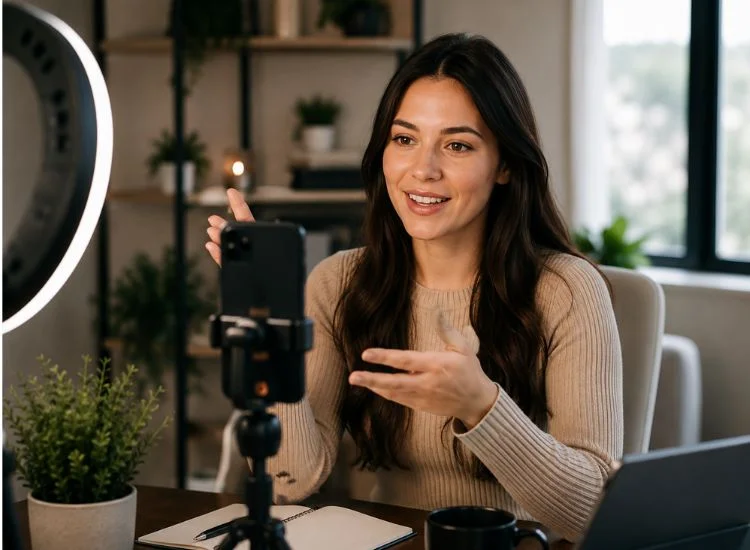
Once you've chosen a platform, adapt your format to what its algorithm is actually testing for. On TikTok and Instagram, that means a hook within the first three seconds, a loop that earns a rewatch, and a caption written to earn saves. On YouTube, it means fixing your intro first if 30-second retention drops below 70%, since that single metric predicts whether the rest of the video gets a chance.
Consistency still matters more than volume. According to a 2026 Buffer study analyzing close to two million posts across more than 100,000 users, creators who posted in at least 20 of a 26-week window saw roughly 450% more engagement per post than creators who posted in four weeks or fewer. Even posting in 5 to 19 of those weeks, less than half the window, delivered around 340% more engagement than sporadic posting. You don't need a daily schedule. You need a sustainable rhythm you can actually keep.

Growth isn't one-way broadcasting. Reply to comments, follow accounts in your niche, and participate in conversations instead of posting and disappearing. Showing up for your audience consistently, without needing to be a technical expert, is what makes the engagement side of growth sustainable.
The data backs up the effort. Replying to comments is associated with a clear, measurable engagement lift across all five major platforms studied. Replies generate more comments, more comments send stronger quality signals to the algorithm, and that keeps your post alive in the feed longer.
At the same time, don't rely on any single platform to hold your entire relationship with your audience. The creators seeing the steadiest growth in 2026 are the ones building direct connections beyond the algorithm: email lists, private groups, and subscriber platforms that survive any one feed's next update.
Circle back to the purpose statement you wrote at the start. Your tone of voice, values, and reasons for creating in the first place are what your audience actually connects with. This matters more in 2026 than it did before: audiences and algorithms alike are increasingly skeptical of overly polished, AI-generated-feeling content, and they reward creators who show up as themselves. Staying authentic to your original purpose is what turns a following into a community that sticks around past the next trend cycle.
Want to keep building on this? Check out content creator tips.
There's no fixed timeline, but consistency compounds faster than most creators expect. As covered above, creators who post regularly across most of a 26-week window see roughly 450% more engagement per post than sporadic posters, which speeds up discovery well before follower counts look impressive.
The best platform is whichever one your specific audience already uses, confirmed through direct research rather than assumption. TikTok favors niche-to-niche discovery regardless of follower count, YouTube rewards strong retention in the first 30 seconds, and Instagram runs separate ranking systems per surface, so match the platform to your content format and audience behavior first.
Sustainable consistency beats volume. Posting in at least 20 of 26 weeks delivers the strongest engagement lift, with diminishing returns beyond that point. A rhythm you can maintain matters more than posting daily.
Less than it used to. On TikTok, every video is tested against a small audience regardless of the creator's follower count, and reach depends on early engagement performance rather than existing audience size. Building genuine engagement matters more than accumulating followers alone.
Reply to comments, participate in conversations in your niche, and build direct relationships through email or private communities you own. Replying to comments alone is linked to a measurable engagement lift across every major platform.
Audiences and platform algorithms are increasingly skeptical of overly polished or AI-generated-feeling content. Creators who stay authentic to their original purpose and show up as themselves are outperforming those chasing a perfectly produced look.


.png)


.png)