

The live streaming trends shaping 2026 come down to one shift: hosts now juggle more in real time than ever. Streams are faster, spread across more platforms, and more AI-assisted, which means reacting to chat, selling on camera, and staying on message across two or three platforms at once, all without sounding scripted.
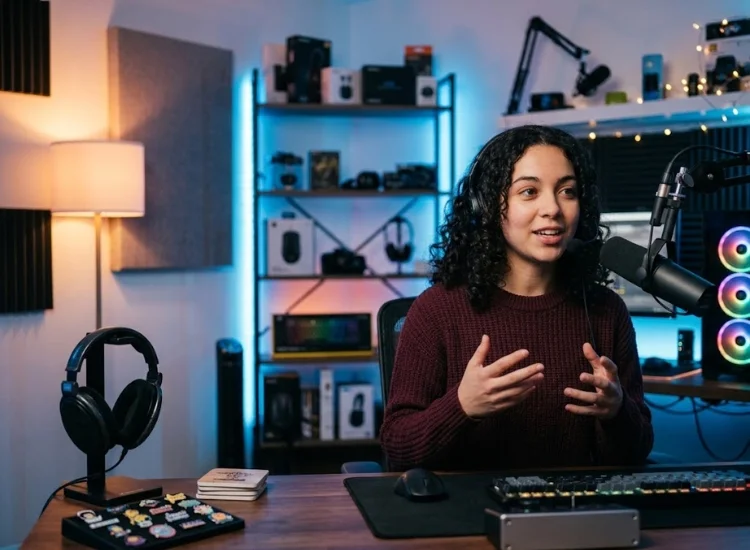
Live streaming's growth in 2026 comes from creators, not just platforms. Total hours watched across major streaming platforms rose from 20.90 billion in Q4 2025 to 21.49 billion in Q1 2026 (Streamlabs and Stream Hatchet, Q1 2026 Live Streaming Report), and the market overall is projected to reach $318 billion by 2031 (Mordor Intelligence, Live Streaming Market Report, 2026).
What's changed is what audiences are watching. Across Twitch, Kick, and Bigo Live, "Just Chatting" and IRL content now out-draw traditional gaming streams. Twitch CEO Dan Clancy put it plainly: streamers make more money when they're "just chatting," because their audience is more engaged with them as people, not with the game on screen.
Twitch CEO Dan Clancy:
"People want to be heard." (Digiday, 2026)
This transition puts delivery front and center. As the stream becomes the focal point, pauses, hesitation, and overly rigid delivery stand out much more than when gameplay dominated the frame. Creators on Teleprompter.com face this exact challenge today: maintaining a clear script nearby while delivering it with complete naturalness.
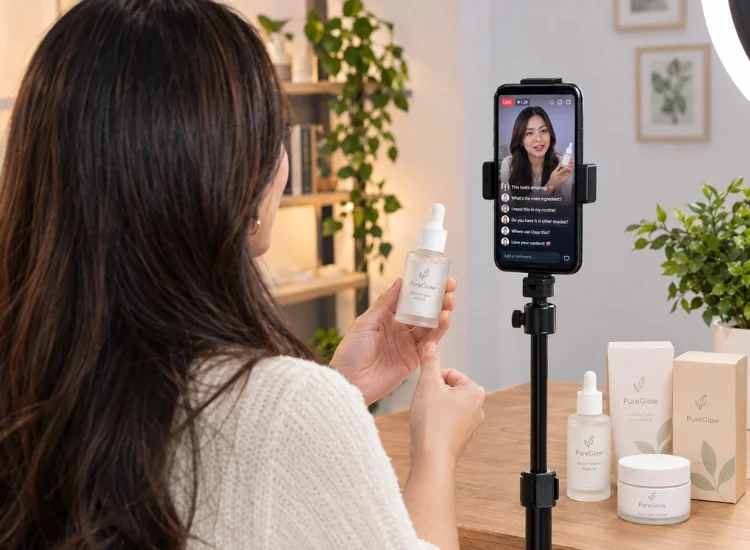
Live shopping is no longer an experiment bolted onto a platform, it's a standing feature on YouTube Live Shopping, TikTok Shop, Amazon Live, and Facebook Live Shopping. Hosts are now expected to do three things simultaneously: read live chat, hit specific product talking points, and keep the pace natural enough that it doesn't feel like a scripted infomercial.
That combination is harder than it sounds. A host who's heads-down reading a script loses the chat. A host who's fully improvising misses pricing details, promo codes, or compliance language that has to be said exactly right. The middle ground is a script that's there when you need it and invisible when you don't.
Exploring why businesses are leaning into live video? Here’s the guide to live streaming benefits for business, breaking down the data behind driving real customer engagement and conversion growth.
AI's biggest impact on live streaming in 2026 isn't visual effects, it's removing production friction. Real-time captioning, live translation, and automated chat moderation are now standard on major platforms, which means smaller creators can run productions that used to require a full crew.
The tradeoff is that viewers now expect that baseline polish. A stream with garbled captions or a host visibly reading off-screen notes stands out for the wrong reasons when AI has already normalized a smoother bar of quality everywhere else.

Short-form content trained audiences to expect a payoff in seconds, and that expectation is bleeding into live formats. Quick live drops, behind-the-scenes bursts, and short Q&A sessions are becoming their own category, distinct from the two-hour-plus long-form stream.
Writing for short-form live means writing tighter. There's no time to warm up or circle back to a point, quick live drops work best when you already have two or three formats you can repeat reliably. The content ideas for live streaming guide breaks down formats built to hold up under a tight time window.
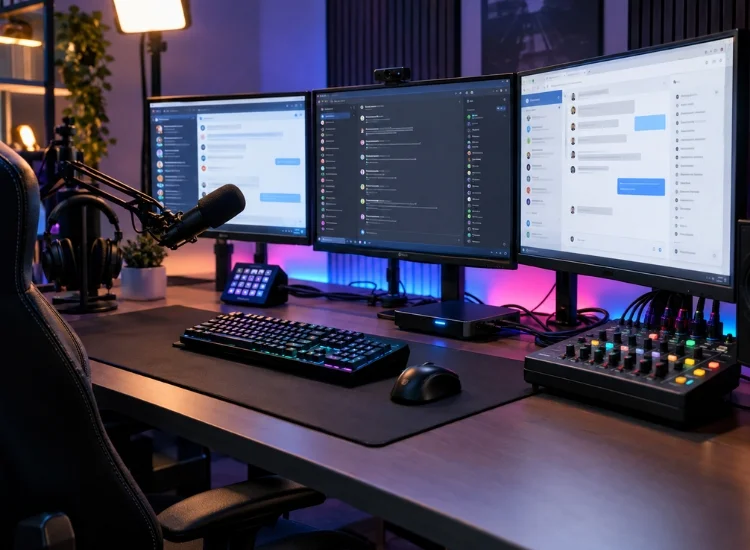
Twitch lifted its multi-streaming restrictions in 2024, and by 2026 simulcasting to Twitch, YouTube, and Kick simultaneously has become standard practice for creators chasing a fragmented audience. Viewers aren't consolidating on one platform, they're spread across several, and creators are following them there.
If you're evaluating which platforms to focus on before expanding your reach, check the beginner's live streaming setup guide to see a breakdown of each platform.
Simulcasting multiplies the delivery problem. The same script, the same talking points, and the same pacing now have to hold up across multiple chat windows and multiple audiences at once. A shared script that keeps you on pace regardless of which platform's chat you're glancing at matters more here than in a single-platform stream.
Interactive streaming, polls, live Q&A, gamified formats, and real-time chat features, has grown from a built-in feature of live video into a market segment tracked on its own. The interactive streaming market reached $39.58 billion in 2025 and is forecast to hit $126.09 billion by 2030, a 26.08% CAGR that outpaces live streaming's overall growth rate (Mordor Intelligence, Live Streaming Market Report, 2026).
That growth reflects platforms building dedicated tooling around interactivity rather than treating it as a side feature. Structured Q&A formats, live polling, and virtual-event style gamification are being built as first-class features, not bolted onto a chat window.
Polls, live Q&A, and real-time chat interaction aren't add-ons anymore, they're the format. That raises the cognitive load on a host mid-stream: reading and responding to chat, holding eye contact with the camera, and staying on script all at the same time.
These trends don't pause when the camera turns on; rather, they demand even greater focus to manage all at once. The difference between a broadcast that feels genuinely engaged and one that sounds like an awkward script read is a prompter that adapts to your speech rate rather than forcing you to match its pace. Teleprompter.com addresses this precise challenge, giving creators a seamless way to handle shifting channels, varied video types, and active chat in a single stream.
Streaming trends will keep shifting, platforms will keep multiplying, and audiences will keep expecting more real-time interaction, not less. The through-line for every one of them is the same: your delivery has to hold up under more pressure than it used to, with less room to fumble a line.
The five biggest are live commerce maturing into a standing revenue channel, AI handling real-time captioning and moderation, short-form live content splitting off from long-form streams, multi-platform simulcasting becoming standard, and audiences expecting active participation through chat and polls rather than passive viewing.
Yes. The live streaming market is projected to reach $318 billion by 2031 (Source: Mordor Intelligence, 2026), and total hours watched across major platforms grew from 20.90 billion to 21.49 billion between Q4 2025 and Q1 2026 (Source: Streamlabs and Stream Hatchet, via Digiday, 2026).
Live commerce combines real-time audience engagement with direct purchasing, letting viewers buy while a host demonstrates a product. Platforms including YouTube Live Shopping, TikTok Shop, and Amazon Live have built dedicated tools for it, turning what was a novelty a few years ago into a standard sales channel.
AI now handles tasks that used to require a full production crew, including real-time captioning, live translation, and automated chat moderation. This lowers the barrier to running a polished stream solo, but it also raises the baseline quality viewers expect from every stream they watch.
Multi-platform simulcasting means broadcasting the same live stream to several platforms at once, such as Twitch, YouTube, and Kick. It became standard practice after Twitch lifted its exclusivity restrictions in 2024, since audiences are now spread across platforms rather than concentrated on one.
Not always, but it helps whenever you need to hit specific details exactly right, like pricing, compliance language, or sponsor mentions, while also reacting to live chat. A voice-paced script keeps you on message without making the stream sound read from a page.


.png)


.png)