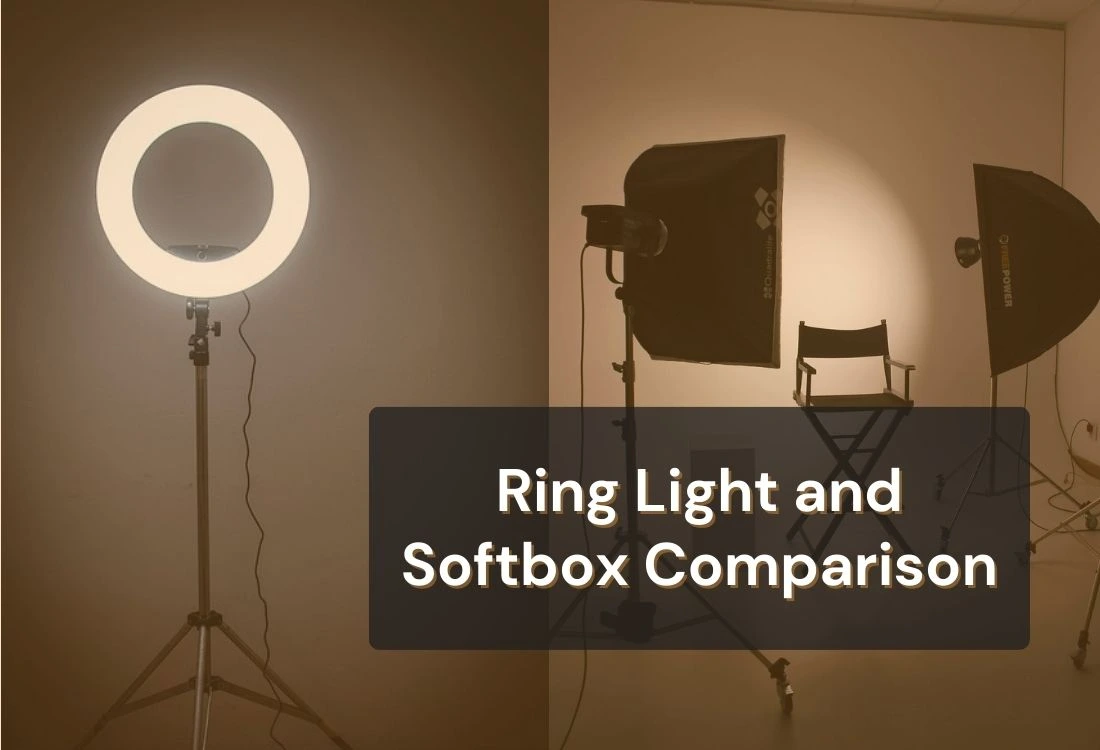


Good lighting controls how sharp and professional your videos look. Many creators compare the ring light vs softbox when building their video lighting setup. Both can brighten your scene, but they shape light in different ways. The right choice depends on your filming style, your space, and the type of teleprompter setup you use.
This guide breaks down each lighting option so you can create cleaner, more polished videos for YouTube, online courses, livestreams, social media, and presentations.
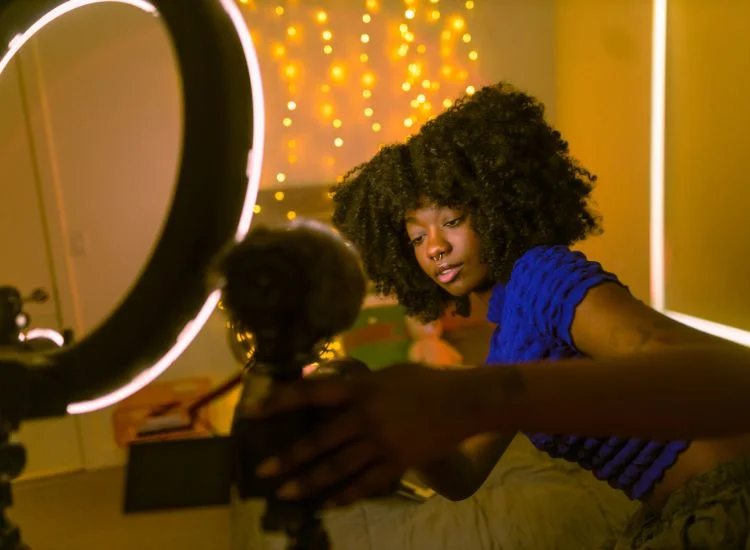
A ring light is a circular light source that produces bright and even illumination. Creators use it for close-up videos, makeup content, live streams, and simple talking head recordings. The light sits close to the camera or phone, which gives the face a clear and controlled look.
Ring lights create direct and bright lighting that reduces strong shadows. They are lightweight, easy to mount, and simple for beginners to use. The circular design provides even light that works well for short videos and quick setups.
Ring lights can cause reflections on shiny objects or glasses. Creators using teleprompter glass may see circular glare on the beamsplitter surface. The light can also flatten facial features or highlight texture when placed too close.
You can improve your results by learning ring light techniques for video recording, especially when you film close to the camera.
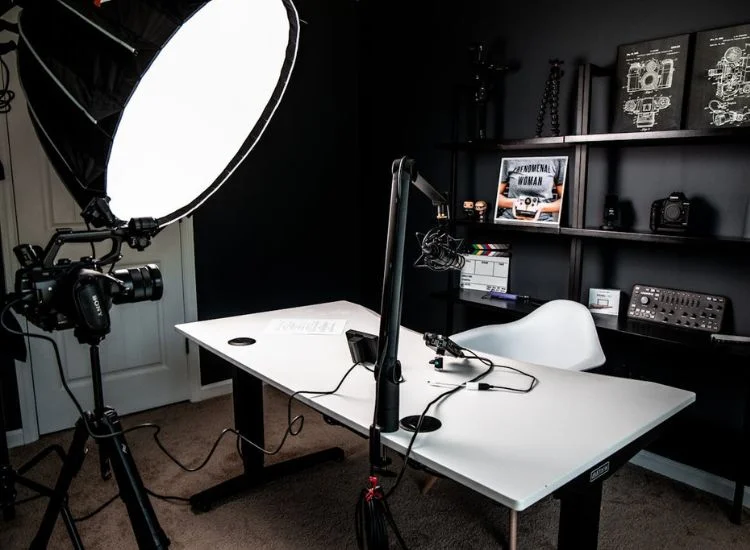
A softbox spreads light through a diffusion panel, which makes the output soft and natural. Many creators choose softboxes for long-form videos, interviews, online courses, and professional tutorials because the light feels balanced and smooth.
Softboxes create soft shadows that add depth to the face. This makes them ideal for speaking videos, expert presentations, and on-camera lessons. A softbox also reduces glare on teleprompter glass, helping you keep a clean visual when using the Teleprompter.com app with a physical teleprompter.
Softboxes require more space and setup time. They need a stand and proper placement. While they produce high-quality lighting, they are less portable and better suited for dedicated filming areas.
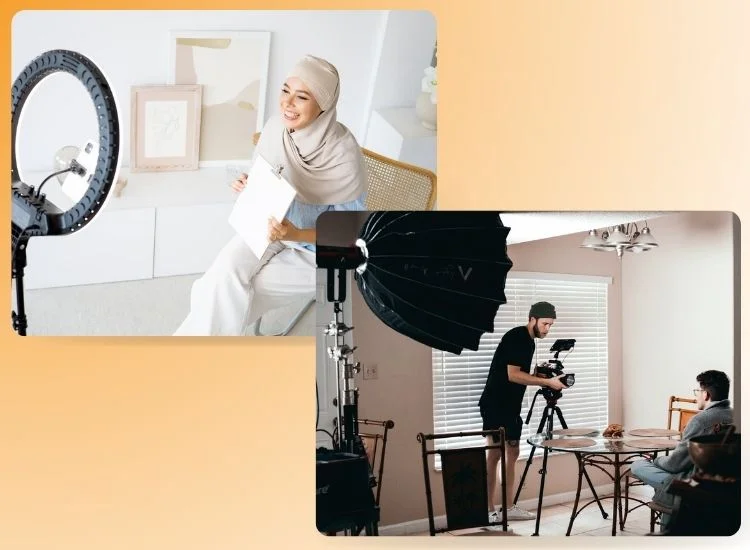
A ring light produces bright and direct light. A softbox creates soft and even lighting that spreads across the scene. The difference becomes clear on the face. Ring lights tend to flatten facial features, while softboxes bring out natural depth.
Ring lights minimize shadows but can create harsh highlights when placed too close. Softboxes add soft shadows that look natural on camera, making them ideal for professional talking head videos.
Softboxes are gentle on skin, which helps reduce shine. Ring lights can make skin look reflective, which may need more makeup or powder during filming.
Ring lights are more portable. You can attach them to your phone, carry them in small bags, or mount them almost anywhere. Softboxes need more setup time and space.
Ring lights are usually more affordable. Softboxes range higher, but the improvement in light quality often justifies the price for creators focused on professional recording.
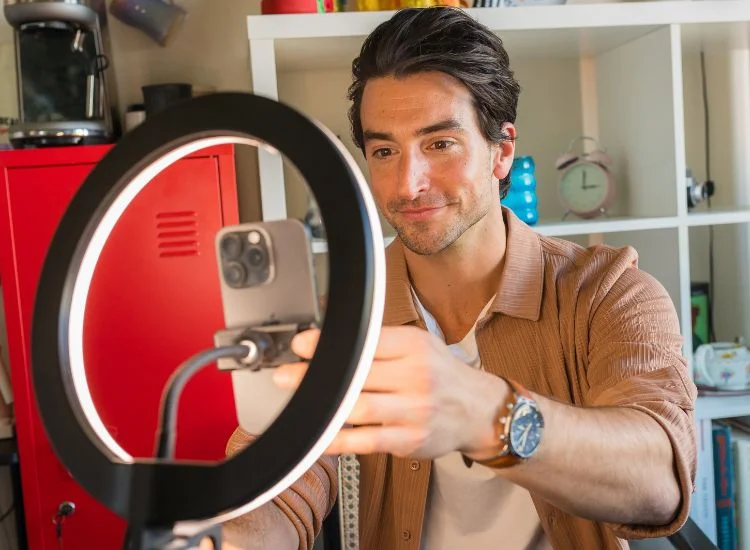
If you record with a physical teleprompter that includes beamsplitter glass, the placement of lighting becomes important. Ring lights can create circular reflections on the glass, which may appear on camera. Softboxes help reduce these reflections because their diffused light spreads more evenly. Placing a softbox at a slight angle keeps the surface clear and supports natural eye contact during recording.
If you use the Teleprompter.com app directly on your phone or tablet, you have more flexibility with lighting choices. Ring lights work well for close-up shots since you do not have to manage reflections on a physical surface.
Softboxes still provide smooth and natural lighting for tutorials, long videos, and talking head recordings. Both options work effectively as long as the light stays balanced and does not overpower your screen brightness.
Select a softbox if you want soft, natural lighting or if you prefer a setup that minimizes glare issues. Choose a ring light for fast setups, simple recordings, and portable shooting. Both lighting tools can deliver high-quality results, but softboxes often look more polished for interviews, course content, and scripts that require a steady recording environment.
Your decision depends on your filming style and the type of teleprompter setup you use. Both lighting tools support strong video quality, but each one fits a different video lighting setup.
Choose a ring light if:
Choose a softbox if:
Creators building their first recording space can explore ways to set up a home studio on a budget to see how each lighting choice fits into their workflow. This helps you decide if the clean and direct light of a ring light supports your goals or if the softer and more controlled output of a softbox works better for your style.
Lighting should enhance your delivery and help you look confident on camera. These simple tips can elevate the quality of your videos:
You can explore more creative lighting techniques for video to shape your setup and match your recording style.
Ring lights and softboxes both support better video quality, but each serves a different purpose. Ring lights provide simple and direct lighting for quick setups and short recordings. Softboxes deliver soft, natural light that works well for longer videos, tutorials and presentations that require a steady visual look.
For creators using teleprompter setups with glass, softboxes often produce cleaner results by reducing reflections. For those recording directly with the Teleprompter.com app on a device, both lighting options can work based on your space and filming style. The right lighting choice helps you stay focused, look confident and deliver your message clearly.
Lighting is just one piece of the room, though — once you've picked a light, setting up a YouTube studio at home covers how it fits together with your camera position, background, and audio setup for a space you can reuse every time you record.
You can simplify your recording process and stay focused on your message by signing up with Teleprompter.com.
Ring lights can create glare on reflective surfaces, flatten facial features, and produce bright highlights that may look harsh on camera.
A softbox is often better because it creates soft, natural lighting with gentle shadows and reduces reflections, making videos look more polished.
Softboxes diffuse light for a smooth, natural look, while LED lights produce direct light that can be brighter but also more harsh on the subject.
Softboxes are better for talking head videos since they provide softer shadows and look more natural, especially for tutorials or long recordings.
Yes. Ring lights often reflect on the teleprompter glass, while softboxes reduce glare and keep the screen clear for clean, professional video results.


.png)


.png)