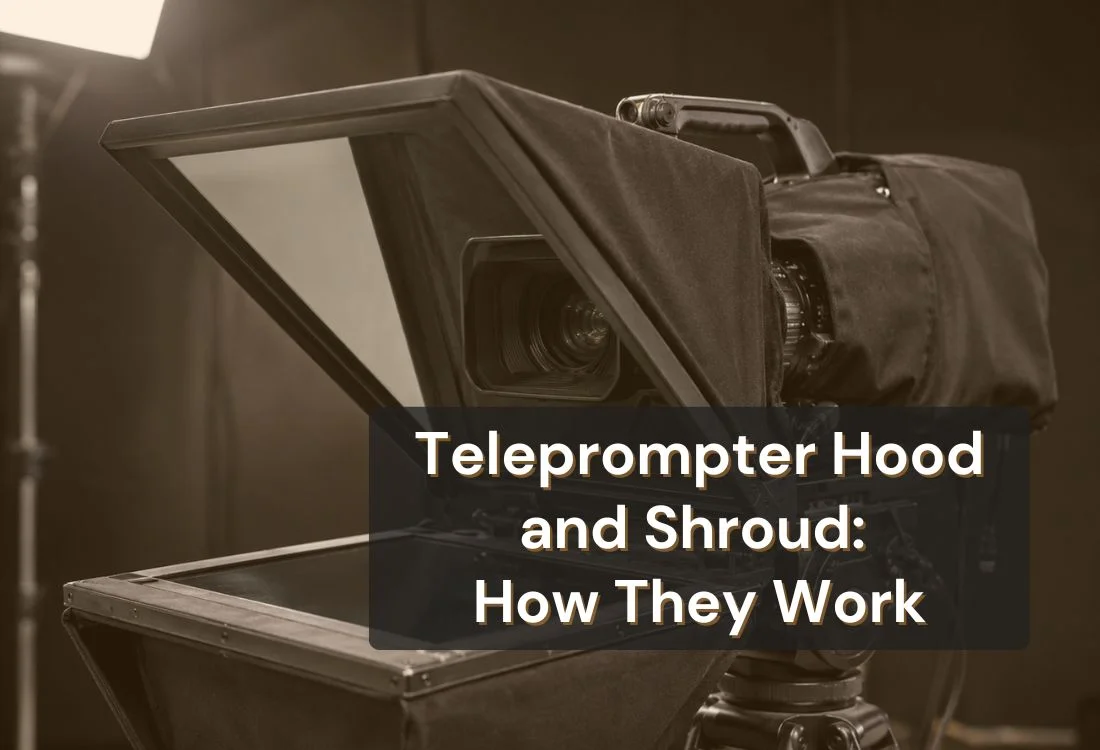


A teleprompter hood and shroud is the fabric or rigid covering that wraps around the camera and beamsplitter glass on a hardware teleprompter rig. Its job is simple but critical: block stray light and unwanted reflections so the camera captures a clean image of you, not a ghostly outline of the script.
If you've watched a news anchor read fluidly into the camera or seen a creator deliver a polished talking-head video, you've seen a teleprompter setup at work. Many of those professional rigs rely on a hood and shroud to perform properly. Without one, ambient light leaks into the lens, washes out the image, and creates faint reflections of the script on the final shot.
This guide breaks down what a teleprompter hood and shroud actually are, how they differ, when you need them, and when you can skip the hardware altogether. By the end, you'll know whether your filming workflow needs a hood and shroud, or whether a free teleprompter app on your phone, tablet, or laptop will do the job just as well.
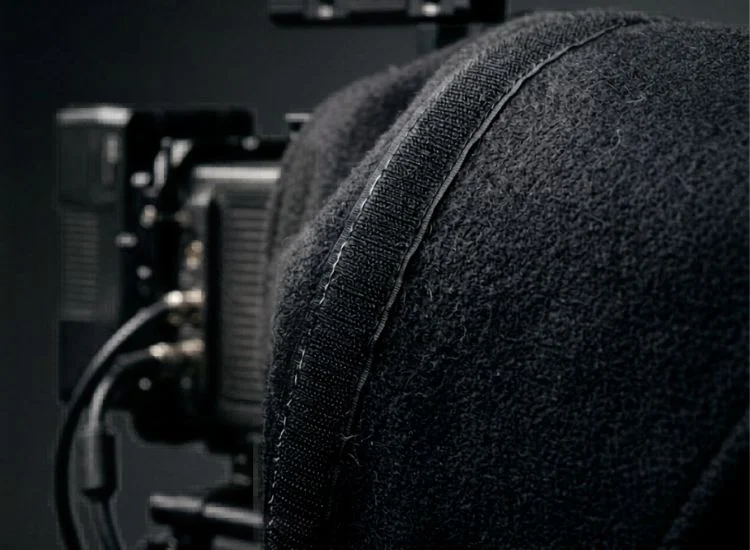
A teleprompter hood is the fabric covering that wraps around the back and sides of the camera on a beamsplitter teleprompter rig. It blocks ambient light from reaching the camera lens and the angled glass in front of it, which prevents reflections from showing up in your footage.
Most hoods are made from soft, light-absorbing material such as black duvetyne or velvet. They attach to the rig with elastic, velcro, or magnetic clips. Some hoods are open at the front (camera lens side) and at the back (where the operator can see through to the glass).
Without a hood, light from your studio lights, ceiling fixtures, or windows hits the beamsplitter glass at the wrong angle and bounces into the camera. The result is a washed-out image with a faint script visible behind your face.
A teleprompter shroud is the protective enclosure that surrounds the entire optical assembly of a hardware teleprompter, including the monitor, beamsplitter glass, and sometimes the camera. Its primary role is to shield the optics from light, dust, fingerprints, and accidental knocks during filming.
Many people use "hood" and "shroud" interchangeably, but they describe slightly different parts. A hood covers the camera side. A shroud covers the broader optical housing. On compact teleprompter rigs, a single piece of fabric may serve both functions, which is why the two terms blur together in everyday use.
Here is the practical difference between the two parts at a glance.
A hood and shroud do three important jobs in any hardware teleprompter rig. Skipping them on a beamsplitter setup almost always means lower video quality and longer editing time.
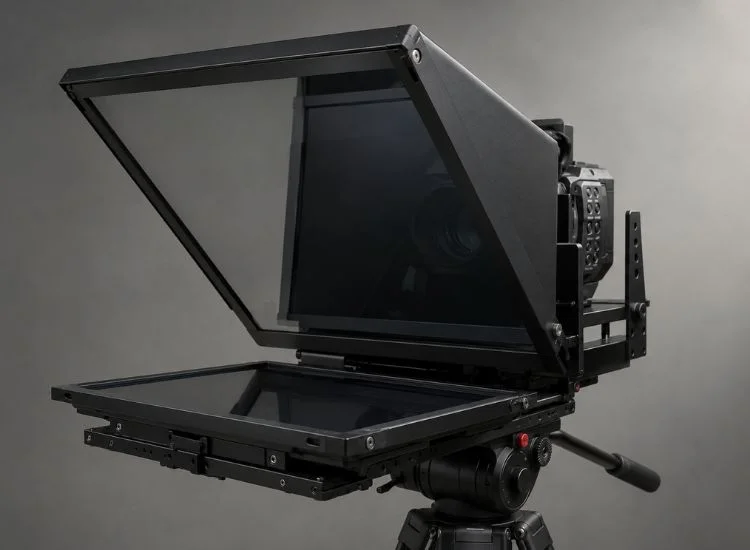
You need a hood and shroud whenever you film with a hardware beamsplitter teleprompter, especially in these situations:
If your camera sits behind a piece of angled glass, you almost certainly need a hood. The exception is a tightly controlled, dim studio space, and even then most operators add one for insurance.
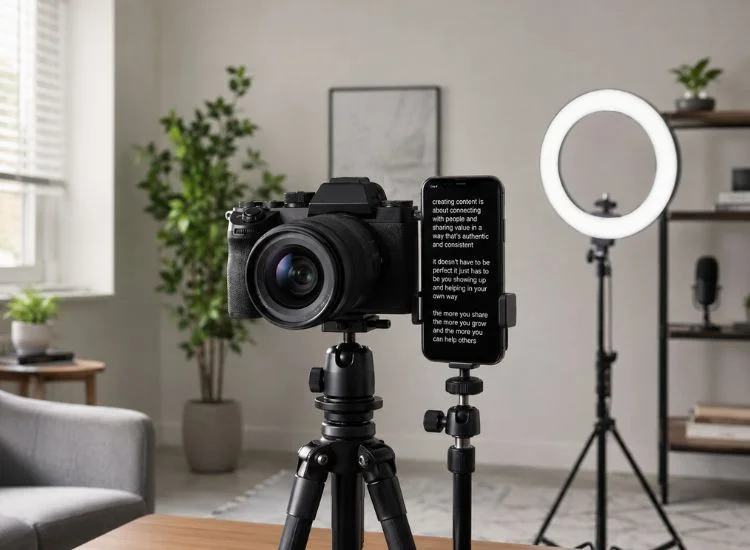
You don't need a hood or shroud when your filming setup has no beamsplitter glass. That covers two of the most common workflows for solo creators:
In both setups, there is no angled glass for light to bounce off and nothing to enclose.
It's worth noting that the same app also works inside a beamsplitter rig. The Teleprompter.com app can serve as the script source where your phone or iPad mounts underneath the angled glass and the camera films through it. Modern integrated teleprompters extend this further with built-in HD displays that connect to your phone or computer over a single USB-C cable, mirroring the Teleprompter.com app, a Zoom call, or live chat directly in front of the lens.
In both of those rig-based cases, the setup still uses beamsplitter glass, which means you still need a hood and shroud. The app simply replaces a dedicated monitor as your script source.
The rule comes down to the optics, not the software:
For most solo creators, podcasters, educators, and business professionals, the no-rig route works perfectly and reduces your filming kit to a phone and a small tripod. If you later move into a beamsplitter setup for broadcast-grade output, the same app comes with you. Run Teleprompter.com in your browser or download it for iOS, macOS, or Android, and you're filming within a minute.
The fabric used in a teleprompter hood matters more than most people expect. Different materials absorb light differently and affect how clean your final image looks.
If you build a DIY hood, duvetyne offers the best light-blocking performance for the price.
A teleprompter hood and shroud play a quiet but important role in hardware teleprompter setups. They block stray light, prevent reflections, and protect your optical assembly so your footage stays clean and your editing time stays short. If you film with a beamsplitter rig, treat them as essential accessories rather than optional add-ons.
If you'd rather skip the hardware entirely, an app-based teleprompter delivers the same word-for-word reading experience without the rig, the glass, or the fabric. You read your script directly off your phone, tablet, or laptop screen while keeping natural eye contact with the camera.
Ready to shoot without the gear? Use Teleprompter.com free in your browser, on iOS, on Android, or on Mac.
A teleprompter hood is the fabric covering on the camera side of the rig that blocks light around the lens. A shroud is the wider enclosure that protects the monitor, beamsplitter glass, and full optical assembly. The terms overlap in casual use, but technically they cover different parts of the setup.
Yes. A beamsplitter teleprompter relies on a partially reflective piece of glass set at a 45-degree angle. Without a hood, ambient light bounces off that glass and into the camera lens, producing visible reflections and washed-out footage. A hood is essential for clean output.
Yes. A basic DIY hood requires black duvetyne or velvet fabric, velcro strips or elastic bands, and about an hour of work. Measure the back of your beamsplitter rig, cut the fabric to size with an opening for the lens, and secure it with velcro.
Black duvetyne is the industry standard because it absorbs almost all incoming light and resists wear. Velvet is a budget-friendly alternative that works well in low-light environments. Avoid shiny synthetics, which can reflect light back into the lens.
A standalone teleprompter hood costs between $30 and $100, depending on size and brand. A full shroud system bundled with a beamsplitter rig can add $50 to $200 to the total cost. DIY versions cost under $20 in materials. For a wider view across setups, see our breakdown of teleprompter devices for every budget.
It depends on the setup. The Teleprompter.com app works in three ways, and only one needs a hood. Recording with your phone, tablet, or laptop's built-in camera while the script scrolls on the same device needs no hood. Running the app on one device next to an external camera needs no hood either. Only mounting the app inside a beamsplitter rig still needs a hood, because the angled glass is what creates the need.
No. A properly fitted hood does not touch the lens or sensor and poses no risk to the camera. Make sure the fabric is secured away from any moving parts such as the zoom ring or focus motor, and check that no loose threads can interfere with autofocus.


.png)


.png)